
By Michael Gwarisa
In May 2022, Zimbabwe took a bold and progressive step by repealing Section 79 of the Criminal Law (Codification and Reform) Act, which criminalised the deliberate transmission of HIV. This repeal was not merely a legislative change, it was a milestone in Zimbabwe’s HIV response, signaling a shift toward science, public health, and human rights. It reflected years of research and advocacy that consistently showed criminalising HIV does not prevent transmission but rather perpetuates stigma, gender inequality, and legal uncertainty.
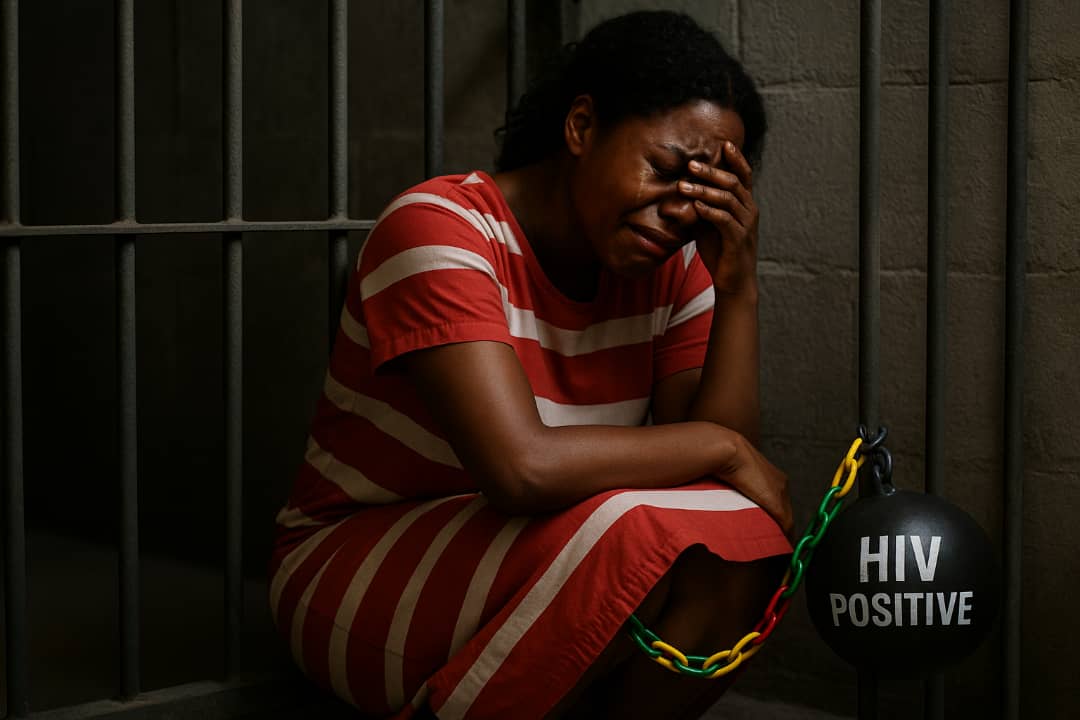
Yet today, a complex and concerning development threatens to undermine that progress. A woman in Harare, accused of deliberately transmitting HIV, is facing prosecution under Section 79, a law that no longer exists. Her application to have the matter referred to the Constitutional Court was dismissed by the magistrates’ court, which determined that the prosecution could proceed based on the Interpretations Act. This move has raised important legal and public health concerns, particularly around the constitutionality of applying repealed laws and the potential consequences for Zimbabwe’s broader HIV response.
It is important to clarify that this is not a critique of judicial conduct but rather a spotlight on the implications of this case for the legal system and public health in Zimbabwe. The intention here is not to question the integrity of the magistrate but to contribute to a national conversation on the risks of reverting to outdated legal provisions in the face of modern legal and health realities.
Why the Repeal Mattered
The repeal of Section 79 came after decades of critique from health experts, human rights advocates, and legal scholars. Zimbabwe’s initial criminalisation of HIV transmission under the 2001 Sexual Offences Act, and later under Section 79 of the Criminal Code, was originally intended as a deterrent to protect public health. However, the law evolved into a punitive tool that disproportionately affected women and marginalised groups.
According to the ZimLII legal commentary titled “Criminalisation of Deliberate Transmission of HIV: A Subtle Perpetuation of Gender Inequality in Zimbabwe” (2022), women were more likely to be prosecuted under the law simply because they were more frequently tested for HIV, particularly during antenatal visits. This imbalance placed the burden of disclosure and proof squarely on women, even when no evidence of actual transmission existed.
In the 2016 case of S v Mpofu & Another, the Constitutional Court was called to assess the legality and fairness of criminalising HIV transmission. The case exposed the difficulties in applying Section 79 fairly, particularly in proving intent and causation. The case also underscored the dangers of vague legislation that permits prosecutions based on mere suspicion or unverified claims.
International evidence, including UNAIDS’ 2002 and 2021 policy briefs on HIV criminalisation, supports this view. These documents argue that criminal laws do not prevent HIV but rather drive people away from testing and treatment, increase stigma, and often ignore medical advancements such as viral suppression through antiretroviral therapy. Zimbabwe’s repeal of Section 79 was therefore a reflection of this global shift toward evidence-based public health policies.
A Cautionary Legal Moment
The current case presents a critical test of Zimbabwe’s commitment to that evidence-based approach. While the magistrates’ court has applied the Interpretations Act to justify proceeding with the prosecution, concerns remain over whether such retrospective application of a repealed law aligns with constitutional guarantees. Section 56 of Zimbabwe’s Constitution enshrines equality before the law, while Section 70 guarantees the right to a fair trial, and Section 49 protects individual liberty.
Legal scholars such as Huni (UZ, 2016) have argued that prosecuting individuals for non-disclosure, exposure, or transmission of HIV—even under active laws, often violates human rights and fosters unjust outcomes. Once a law has been repealed, its continued application, even under procedural statutes like the Interpretations Act, raises fundamental questions about justice and legal certainty.
To prosecute a person today for an offence that no longer exists may unintentionally create the perception that Zimbabwe is reverting to a more punitive and outdated approach to HIV. That could threaten the very foundation of trust on which the country’s successful HIV response is built.
The Public Health Cost of Regression
Zimbabwe has made significant gains in the fight against HIV. The country has surpassed the UNAIDS 95-95-95 targets, meaning that over 95 percent of people living with HIV know their status, are on treatment, and have achieved viral suppression. This progress is built on removing barriers to testing and treatment, including legal barriers.
Fear of prosecution can deter people from knowing their status or disclosing it. When individuals suspect that disclosure could land them in court, even under repealed laws, they may avoid health services altogether. This creates a climate of fear, silence, and misinformation, which ironically increases the risk of transmission. Criminalisation, whether active or symbolic, runs counter to effective epidemic control.
As UNAIDS has noted, “Applying criminal law to HIV transmission or exposure does not prevent the spread of the virus and may instead create a false sense of security while exacerbating stigma and discrimination.”
Looking Ahead with Compassion and Clarity
This case is not simply about one woman; it is about whether Zimbabwe will continue to lead in HIV response through compassion, scientific integrity, and legal fairness. Upholding the repeal of Section 79 means affirming that HIV is not a crime and that those living with the virus deserve dignity and rights, not fear and punishment.
Allowing a prosecution under a repealed law—even as an isolated incident—sends a confusing message both domestically and globally. It risks undermining public confidence in the legal system and Zimbabwe’s HIV response. It also risks retraumatising individuals living with HIV, particularly women, who have historically borne the brunt of these prosecutions.
In light of this, it is crucial that Zimbabwe remains aligned with international best practice and constitutional values. Our legal and public health systems should work together to protect—not punish—those living with HIV. That means reaffirming that the repeal of Section 79 was not just symbolic, but a lasting commitment to justice, equality, and health for all.
References
-
ZimLII (2022). Criminalisation of Deliberate Transmission of HIV: A Subtle Perpetuation of Gender Inequality in Zimbabwe. Available at: https://zimlii.org/akn/zw/doc/paper/2022-12-01/criminalisation-of-deliberate-transmission-of-hiv-a-subtle-perpetuation-of-gender-inequality-in-zimbabwe/eng@2022-12-01/source
-
ZimLII (2016). Constitutionality of the Offence of Deliberately Transmitting HIV: Case Note on the Case of S v Mpofu & Another (CC 5/16). Available at: https://zimlii.org/akn/zw/doc/journal-article/2016-01-01/constitutionality-of-the-offence-of-deliberately-transmitting-hiv-case-note-on-the-case-of-s-v-mpofu-anor-cc-5-16/eng@2016-01-01
-
Huni, C. (2016). Criminalization of HIV Non-Disclosure: A Violation of Rights? University of Zimbabwe Repository. Available at: https://ir.uz.ac.zw/bitstream/handle/10646/3325/Huni_Criminalization_of_HIV_non_disclosure.pdf?sequence=1&isAllowed=y
-
UNAIDS (2002). Criminal Law, Public Health and HIV Transmission: A Policy Options Paper. Available at: https://data.unaids.org/publications/irc-pub02/jc733-criminallaw_en.pdf
-
UNAIDS (2021). HIV and Human Rights Fact Sheet: Ending Overly Broad Criminalization. Available at: https://www.unaids.org/sites/default/files/media_asset/01-hiv-human-rights-factsheet-criminalization_en.pdf


