Study Uncovers Reservoirs of Antimicrobial Resistance in Food Processing Environments

By Michael Gwarisa A new study has identified food processing environments, particularly wastewater and sludge, as significant reservoirs for antimicrobial resistance (AMR) genes, including several high-risk variants that pose a threat to human health. The research, led by Thorben Reiche from the Norwegian University of Science and Technology (NTNU), highlights the potential for these facilities to contribute to the environmental spread of AMR. The study, conducted by a team of researchers from NTNU and SINTEF Industry in Norway, alongside the University of Life Sciences in Iași, Romania, investigated the prevalence…

Read More

Zimbabwe Among 14 African Nations Facing Alarming Rise in Drug-Resistant Infections

By Staff Reporter  Results from a newly published study highlight the growing spread of drug resistance across 14 African countries, underscoring the urgent need to strengthen laboratory testing, data systems, and health planning to tackle hard-to-treat infections. The study, known as the Mapping Antimicrobial Resistance and Antimicrobial Use Partnership (MAAP), is the largest of its kind ever conducted in Africa. It was led by a coalition including the Africa Centres for Disease Control and Prevention (Africa CDC), the African Society for Laboratory Medicine (ASLM), One Health Trust, and other regional partners.…

Read More

Children in Africa Face Growing Threat from Drug-Resistant Infections, New Global Study Warns

AMR

By Staff Reporter A sobering new study unveiled Sunday at ESCMID Global 2025 revealed that over 3 million children worldwide died in 2022 due to antimicrobial resistance (AMR)-related infections with nearly 660,000 of those deaths occurring in Africa alone. The findings, presented by researchers from the Clinton Health Access Initiative (CHAI) and global partners, highlight the devastating impact of AMR on the world’s youngest and most vulnerable, placing Africa firmly among the hardest-hit regions. Children in Africa are bearing the brunt of this growing crisis,” said Professor Joseph Harwell, Senior…

Read More

EMA Strengthens AMR Surveillance with Fleming Fund Support

By Michael Gwarisa The Ministry of Environment, Climate, and Wildlife has commended the first phase of the Fleming Fund Grant for supporting the Environmental Management Agency (EMA) in strengthening its surveillance and tracking of antimicrobial resistance (AMR) in the environment. Zimbabwe recently launched the second phase of the One Health National Action Plan (2024-2028) alongside the Fleming Fund II Grant. A key focus of this phase is expanding environmental surveillance and monitoring of AMR levels across the country. EMA’s laboratory has been significantly strengthened and now has the capacity to…

Read More

Zimbabwe Unveils AMR National Action Plan 2.0 as Calls for Domestic Funding Grow

By Michael Gwarisa Zimbabwe requires approximately US$45 million to effectively implement Antimicrobial Resistance (AMR) interventions over the next four years, HealthTimes has learned. This was revealed during the official launch of the National Action Plan for Antimicrobial Resistance in Zimbabwe (NAP 2.0), where the Fleming Fund also announced an additional US$3.5 million in funding to address gaps in surveillance and improve the use of data for policymaking. Officiating at the launch of the Zimbabwe One Health AMR National Action Plan 2.0 (2024-2028) and the Fleming Fund II Grant, Dr. Douglas…

Read More

Antibiotic Resistance is Here. Millions of People are Dying

Reporters:  Aline Suárez del Real,  Edna Namara, Evidence Chenjerai,  Gabriela Meléndez-Rivera,  Lucila Pellettieri,  Odonchimeg Batsukh,  Sunita Neupane For years, Radha Lama bought antibiotics in bulk at a clinic near her home in Kathmandu, Nepal. She took the pills whenever she had a stomachache or headache, without talking to a doctor or nurse, says her daughter Pratikchya Lama. Now, at 57 years old, Radha Lama is on a ventilator in the intensive care unit of Nepal’s Tribhuvan University Teaching Hospital. She hasn’t been able to breathe on her own since August…

Read More

AMR Threatens SDGs Attainment In Africa

AMR

By Michael Gwarisa The World Health Organisation (WHO) data shows that Africa remains heavily burdened with antimicrobial resistance (AMR) compared to all WHO Regions. Africa also has the highest mortality from AMR despite the region having the lowest prevalence of resistance. In 2015, after realising the need for urgent action to combat the growing scourge of AMR, the World Health Assembly adopted the Global Action Plan on Antimicrobial Resistance. Over the years, AMR has been identified as a leading cause of treatment failure in several morbidities such as HIV tuberculosis…

Read More

Zim among highly burdened AMR African countries with National Action Plans

By Kuda Pembere With Zimbabwe drafting its second National Action Plan to reduce Antimicrobial Resistance (AMR), it is among some African countries that is still battling high AMR, a study says. Compared to European countries with AMR national action plans, despite a display of commitment to ameliorate AMR issues, African countries are still struggling with the high burden. A study published in The Lancet titled ‘The burden of bacterial antimicrobial resistance in the WHO African region in 2019: a cross-country systematic analysis’, noted that implementation of these policies was the…

Read More

Using alternatives to antimicrobials working for Murehwa poultry farmers

By Kudakwashe Pembere in Murehwa BEFORE her damascene moment in poultry care, Christine Muunganirwa, a 50 year old woman in Kambarami Village in Ward Murehwa district suffered significant losses. Whenever the chicks fell ill, whether it was a cough, or oddly coloured stool, she rushed to administer some Amoxicillin tablets. Amoxicillin is the most abused antibiotic not only in human health but also poultry. To rationalize the use of antimicrobials in chickens, some nifty poultry farmers in Murehwa district have resorted to using traditional herbal medicines in lieu of antibiotics.…

Read More

‘January disease’ vaccine revives Goromonzi cattle farmers’ hopes

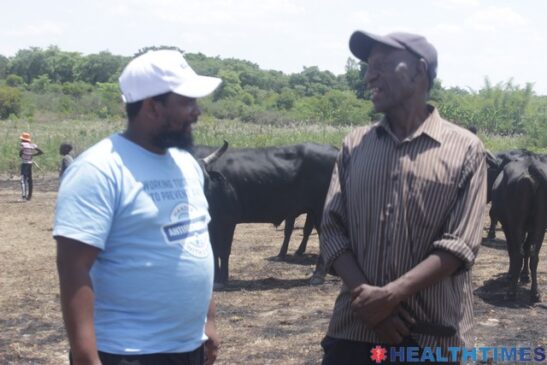
By Kuda Pembere recently in Goromonzi IT is 11 pm in the scotching sun as cattle jump into Mwanza Diptank in Mwanza Village,Goromonzi district, their usual place for dipping to fight against tickbone disease. Diptanks also known as plunge dips also provide the most effective and efficient method for controlling ticks in animals against ticks, flies, mites, lice and other external parasites. An hour earlier, delegates from United Nations quadripartite agencies of the World Health Organization (WHO), the World Organization of Animal Health (WOAH), the Food and Agriculture Organization (FAO) and…

Read More