Stunting Remains a Critical Challenge for Zimbabwe’s Children, Report Reveals

By Michael Gwarisa  Despite improvements in several food security and nutrition indicators, stunting rates among children under five in Zimbabwe remain alarmingly high, posing a significant threat to the nation’s human capital and long-term development, according to the recently released 2025 Rural Livelihoods Assessment Report. The report, produced by the Zimbabwe Livelihoods Assessment Committee (ZimLAC), indicates that 23.8% of children aged 6-59 months are stunted. Stunting, defined as impaired growth and development due to poor nutrition, repeated infection, and inadequate psychosocial stimulation, has lifelong consequences for health, cognitive ability, and economic productivity.…

Read More

Zimbabwe Among Selected Nations for AMR Multi-Partner Trust (MPTF) Fund Phase Two

By Kuda Pembere Zimbabwe is one of three countries in the World Health Organization Africa Region (WHO Afro) eligible to apply for the second phase of the Antimicrobial Resistance (AMR) Multi-Partner Trust Fund (MPTF), following the successful completion of phase one. The fund aims to catalyze and accelerate One Health approaches to AMR in low- and middle-income countries, with a key focus on supporting the implementation of National Action Plans (NAPs). During the official close-out of phase one, Dr. Lawrance Dinginya, Director of Veterinary Technical Services, speaking on behalf of…

Read More

Using alternatives to antimicrobials working for Murehwa poultry farmers

By Kudakwashe Pembere in Murehwa BEFORE her damascene moment in poultry care, Christine Muunganirwa, a 50 year old woman in Kambarami Village in Ward Murehwa district suffered significant losses. Whenever the chicks fell ill, whether it was a cough, or oddly coloured stool, she rushed to administer some Amoxicillin tablets. Amoxicillin is the most abused antibiotic not only in human health but also poultry. To rationalize the use of antimicrobials in chickens, some nifty poultry farmers in Murehwa district have resorted to using traditional herbal medicines in lieu of antibiotics.…

Read More

Zim activates contigency plan for climate hazards

The Zimbabwean Government last week set in motion its National Contigency Plan to help it counter climate hazards before reaching peak levels to prevent the loss of life and people’s livelihoods. By Kudakwashe Pembere Responding to questions from legislators last week, Public Service, Labour, and Social Welfare Minister, Cde July Moyo, said the Civil Protection Unit (CPU) activated a contingency plan to tackle harsh weather impacts on people. We have a contingency plan, which is drawn and led by the Civil Protection Unit in the Ministry of Local Government. Every…

Read More

Zim Scales-Up Efforts To Control Invasive Alien Species

Zimbabwe will soon be reviewing its National Biodiversity Strategy and Action Plan (NBSAP) expected to be giving prominence to the management of Invasive Alien Species. By Kuda Pembere In a speech read on his behalf, Permanent secretary in the Environment, Climate, Tourism and Hospitality Industry Ministry Ambassador Tayerera Faranisi said they are about to commence the revision of NBSAPs.  He said they are behind in their schedule for producing an NBSAP. Colleagues, this is an important topic for us as Ministry of Environment. Just to highlight for you, we are discussing…

Read More

Hand-in-Hand Initiative to turnaround Zim’s agri-food fortunes

THE Hand-in-Hand initiative is expected to proffer solutions that will enhance mobilization of targeted investments and innovation to transform Zimbabwe’s agri-food sector. By Kudakwashe Pembere This was said by the Food and Agriculture Organization (FAO) Subregional Coordinator for Southern Africa, FAO Representative for Zimbabwe, Lesotho and eSwatini Dr. Patrice Talla Takoukam on Friday during the last day of the Agrifood Investment Forum. “The defining characteristics of the Hand-in-Hand Initiative including fostering stronger partnerships, use of advanced data and analytical tools, spatial planning will shape our discussions over the next two and…

Read More

International Year of Millets: a global opportunity to direct policy attention to the nutritional and health benefits of millets

By Patrice Talla – FAO Subregional Coordinator for Southern Africa and FAO Representative in Zimbabwe, Eswatini and Lesotho. This year we are celebrating the International Year of Millets. The year was endorsed by Members of the Food and Agriculture Organization of the United Nations (FAO) and its Governing Bodies and declared at the 75th Session of the UN General Assembly (UNGA) in March 2021. FAO is the Agency taking the lead in celebrating this year. The focus on Millets could not be timelier. They offer valuable solutions in the face of…

Read More

FAO,WHO and Zim Gvt Capacitate Poultry Farmers In Managing AMR

Mr Tonderai Bungu (46) a Rusenverde villager within Odzi District has been in the broiler farming business for five years. However, lack of information around poultry farming and management had been hampering progress in his poultry venture. By Kudakwashe Pembere For years, he had been using unorthodox means of medicating and treating his birds, a move he says would affect output of his chickens and compromise quality if birds. “This is my fifth year rearing chickens but so far it has been a year doing this training. Back then, I…

Read More

Africa Records 63% Jump In Zoonotic Diseases

Diseases transmitted from animals to people in Africa have jumped 63 per cent in last decade, compared with the previous ten year period, according to a World Health Organization (WHO) analysis released on Thursday. By Staff Reporter A zoonotic disease is an infectious disease that is transmitted between species from animals to humans (or from humans to animals). According to the WHO analysis, since 2001, 1,843 substantiated public health events were recorded in the African region – 30 percent of which were zoonotic outbreaks. While the numbers have increased over…

Read More

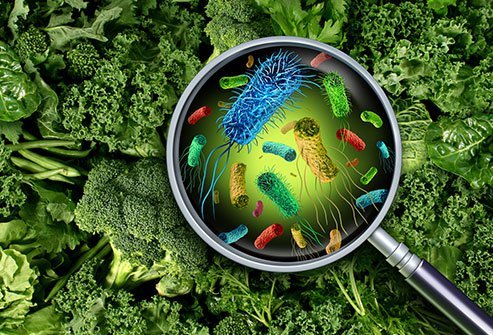
Food poisoning diseases affect 10% of world population annually, says WHO

ten people annually, and the magnitude of the public health burden due to foodborne diseases was comparable to that of malaria or HIV and AIDS, the WHO said Globally, foodborne diseases affect one in ten people annually, and the magnitude of the public health burden due to foodborne diseases was comparable to that of malaria or HIV (human immunodeficiency virus) and AIDS (acquired immunodeficiency syndrome), the World Health Organization (WHO) has said. On World Food Safety Day on June 7, food safety experts called on attention and action to help prevent, detect and manage…

Read More