Health Experts Warn WHO Against Full Tobacco Ban and Call for Balanced Regulation

By Munyaradzi Blessing Doma For decades, global public health experts have agreed on one thing: banning a dangerous substance rarely eliminates its use. It often pushes the trade underground, where governments lose visibility and control. Regulation, however, gives policymakers room to monitor, manage and gradually reduce harm. This tension now sits at the center of a growing global debate. As the World Health Organization (WHO) considers tightening international controls on tobacco production under the Framework Convention on Tobacco Control (FCTC), major tobacco-producing economies fear that sweeping restrictions could trigger economic…

Read More

#BREAKING: Ethiopia Declares Marburg Virus Outbreak

By Michael Gwarisa Health officials who were initially skeptical about the cause of a suspected haemorrhagic fever reported in Jinka, Southern Region of Ethiopia, have now confirmed that the disease is the Marburg virus. Marburg virus disease (MVD), formerly known as Marburg haemorrhagic fever, is a severe and often fatal illness in humans. The average case fatality rate is around 50 percent, although previous outbreaks have recorded rates ranging from 24 to 88 percent. In a statement, the Africa Centres for Disease Control and Prevention (Africa CDC) said the Federal…

Read More

Why COP11 Should Be Livestreamed and Open to the Press

By Munyaradzi Blessing Doma The 11th session of the Conference of the Parties (COP11) to the World Health Organisation’s (WHO) Framework Convention on Tobacco Control (FCTC), scheduled to take place at the Geneva International Conference Centre in Switzerland from November 17 to 22, has faced growing criticism for its lack of transparency during meetings. While the WHO FCTC does not outright ban media attendance at COP sessions, it imposes strict accreditation and vetting procedures that significantly limit press participation. Members of the media may only attend if they have been…

Read More

Minister Mombeshora Commends TB Progress, Calls for Innovation and Local Funding

By Kuda Pembere With several donors pulling out of tuberculosis (TB) programs, Zimbabwe’s dwindling funding base has renewed calls for sustainable domestic financing to keep the disease under control. Officiating the three-day National TB Conference in Harare, Minister of Health and Child Care Dr. Douglas Mombeshora commended healthcare workers for their efforts in helping Zimbabwe exit the World Health Organization (WHO) list of the top 30 high-burden TB countries. “We meet at a moment when we can reflect with confidence on how far we have come. In 2021, Zimbabwe reached…

Read More

Zambia launches malaria vaccine to protect over half a million children

Lusaka – The Government of the Republic of Zambia, through the Ministry of Health, today officially launched the malaria vaccine (R21/Matrix-M) as part of its Expanded Programme on Immunization (EPI), marking a historic milestone in the country’s fight against malaria. Over 500 000 children aged 6‒8 months will be vaccinated in the months following the launch. Malaria remains one of Zambia’s leading causes of illness and death, particularly among children under five years of age. In 2023 alone, malaria incidence among this age group rose to 523 cases per 1000 population, according to the…

Read More

WHO, Africa CDC Commence Countdown to Declare DRC Ebola-Free

By Michael Gwarisa in Durban Just over a month since the Democratic Republic of Congo (DRC) declared an Ebola outbreak, African health authorities say the situation is now under control, and the outbreak could soon be declared over. On September 4, 2025, the DRC Ministry of Public Health announced an outbreak of Ebola Virus Disease (EVD) in Kasai Province. The index case was a 32-year-old pregnant woman from Bulape Health Zone in Kasai. Since then, 53 confirmed cases have been reported from 923 samples collected, with 34 confirmed deaths. However,…

Read More

Nicotine Isn’t the Enemy: World Expert Corrects a Century of Misconception

Nicotine Isn’t the Enemy: World Expert Corrects a Century of Misconception

By Michael Gwarisa For decades, misinformation and misconceptions about nicotine’s role in cancer and tobacco-related diseases have dominated public health discussions. These misconceptions are not limited to the general public; even among medical professionals, confusion persists. A Rutgers-led study found that about 80 percent of physicians surveyed believed nicotine directly causes cancer. Speaking during a session on Lessons in Tobacco Harm Reduction, where he shared insights from an oncologist’s perspective, Professor David Khayat said nicotine misinformation remains widespread among doctors and physicians. We see that there are many physicians who…

Read More

Zimbabwe Excels in Global Health Security Assessment on Immunization, Surveillance, Labs, and Emergency Response

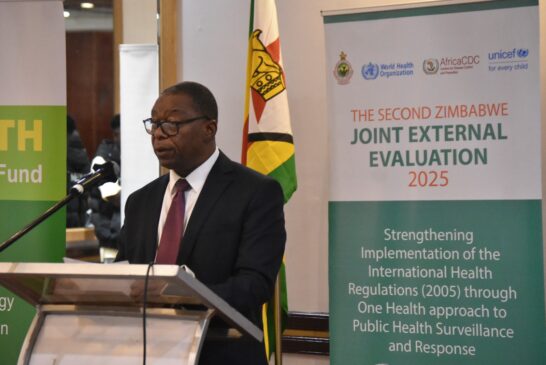
By Kuda Pembere Zimbabwe received a fifty-four percent score in the second Joint External Evaluation (JEE), performing strongly in laboratory systems, surveillance, emergency response, and immunization indicators. This was revealed by Dr. Mohammed Ali Mohammed, the lead of the visiting JEE team, which spent five days in the country. So in summary you can see that thirty out of fifty-six indicators, which is fifty-four percent, attained level three and above, which indicates developed capacity,” he said. “So for this one we can commend Zimbabwe that at least we have attained…

Read More

Africa Lags Behind in Mental Health Spending, Allocating Less Than 10 Cents Per Person

By Kuda Pembere At a time when African Governments are seized with the scourge of drug and substance misuse, Zimbabwe included, they are spending less than US$0.10 per capita on mental health, compared to more than US$50 in other regions of the world. Government expenditure per capita refers to the total government spending divided by the total population, representing the average amount of public money spent per person in a country. This stark underinvestment was highlighted in the World Mental Health Atlas 2024, released earlier this month by the World…

Read More

Budget line to operationalize Public Health Emergency Operation Centres on cards

By Kuda Pembere Zimbabwe is working on establishing a dedicated budget line for the operationalization of the country’s Public Health Emergency Operation Centres (PHEOCs), amid dwindling external financial resources both globally and regionally. Speaking to journalists after officiating the ongoing Public Health Emergency Management Executive-Level Training, the Minister of Health and Child Care, Dr. Douglas Mombeshora, said steps are underway to introduce a legal instrument to formalize this budget line. Zimbabwe remains committed to the Lusaka Call to Action and the operationalization of public health emergency operation centres. We are…

Read More