Red Cross Restores Dignity to Persons with Disabilities in Binga Through Accessible Toilets

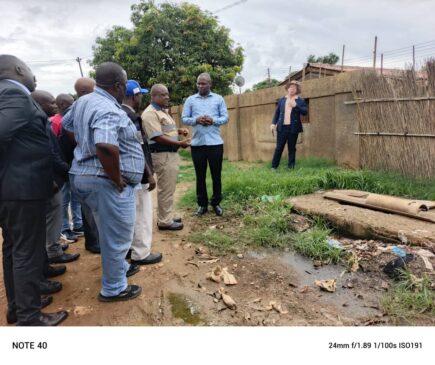
Construction workers completing an accessible toilet for Gogo Mleya, a person with disabilities, in Saba village, Binga.

By Michael Gwarisa in Binga For more than a decade, Mrs. Esteri Simwaka from Siansundu Village in Binga has been helping her 13-year-old daughter, Bwime, relieve herself in the backyard or nearby fields. “It was easier when she was younger,” said a teary Mrs. Simwaka. “But now she’s grown and much heavier. I can’t lift her anymore. I place her in a bathing dish, drag her across uneven ground to the bush, lift her up so she can relieve herself, clean her, and then drag her back home. The sun…

Read More

Red Cross Boosts Safe Water Access for Kuwadzana and Dzivarasekwa Communities

By Kuda Pembere Two Harare institutions long plagued by unreliable water access, Rujeko Polyclinic and Kuwadzana 5 Primary School received a critical boost with the installation of solar-powered water schemes expected to significantly reduce service disruptions and the risk of waterborne diseases such as cholera and typhoid. With water storage capacities of 20,000 litres each, the systems were officially handed over on Tuesday by the Zimbabwe Red Cross Society (ZRCS) to the Dzivaresekwa and Kuwadzana communities. The systems were installed at Rujeko Polyclinic and Kuwadzana 5 Primary School, both of…

Read More

Civil War Worsens Cholera Crisis in Sudan, Warns Africa CDC

https://staging11.atomistic.co.zw/wp-content/uploads/2025/07/qtwruk35.png

By Michael Gwarisa Efforts to curb cholera outbreaks across Africa are facing severe challenges, with Sudan’s ongoing civil war exacerbating an already dire situation. According to the Africa Centres for Disease Control and Prevention (Africa CDC), the continent remains the epicenter of the global cholera burden, with Sudan standing out due to the devastating impact of conflict on public health infrastructure. As of July 10, 2025, Africa has recorded 182,506 cholera cases and 3,697 deaths across 21 member states, according to official data released during Africa CDC’s weekly media briefing.…

Read More

The Hidden Health Toll of Urban Heat: Africa’s Concrete Jungles and the Rise of Climate-Sensitive Diseases

By Michael Gwarisa Africa is battling a number of adverse climatic catastrophes, and over the past five years, climate change is no longer a distant threat across the continent. In African cities, it has become an everyday reality, intensifying urban heat and deepening public health risks. Rising temperatures, prolonged heatwaves, and shrinking green spaces are combining to create “concrete jungles,” densely built environments where heat becomes trapped and air pollution festers. According to experts, this urban heat effect, worsened by poor ventilation and limited vegetation, is now driving a rise…

Read More

Africa’s Cholera Crisis Demands Continental Action

By Michael Gwarisa Africa is currently battling five major infectious disease outbreaks: Mpox, Measles, Dengue, Lassa Fever, and Cholera. Among these, Cholera has emerged as the deadliest, quietly eclipsing the rest in scale and lethality. Yet, despite its heavy toll, it remains under-prioritized. In 2024, the Africa Centres for Disease Control and Prevention (Africa CDC) declared Mpox a Public Health Emergency of Continental Security (PHECS), a bold step triggered by its rapid transmission across the Democratic Republic of Congo (DRC), Sierra Leone, and Uganda. That response was swift and strategic,…

Read More

Zimbabwe Gains Ground in Cholera Battle

By Michael Gwarisa As 2025 began with a surge in cholera cases, particularly in Mazowe’s Glendale area and Kariba, recent developments indicate that the outbreak is now under control due to swift interventions by the government and its partners. The current cholera outbreak started on November 24, 2024, in Gachegache, Kariba district. Cases have since been reported in the Glendale area of Mazowe district, with sporadic instances in Chiredzi, Chipinge, Bikita, Bindura, Shamva, and Kadoma. However, sustained community transmission did not follow these isolated cases. The number of new daily…

Read More

Glendale’s Failing Sewer and Water Systems Spark Deadly Cholera Outbreak

By Michael Gwarisa In Glendale, mornings are no longer a time of fresh beginnings. Instead, residents wake to an unbearable reality, human excreta strewn across their doorsteps. Burst sewer pipes, left unrepaired for months, spew waste into the streets, forcing entire neighborhoods to navigate pools of sludge. The stench of decaying matter clings stubbornly to the air, invading homes and harassing nostrils with every breath. Among those most affected is the Nyirongo family residing in the Highway section of Glendale, whose ordeal serves as a chilling reminder of the public…

Read More

Cholera Returns To Zimbabwe Just Four Months After Declared End of Outbreak

By Michael Gwarisa One person has died in the latest Cholera outbreak that has infected 21 people in the resort town of Kariba in Zimbabwe, the Ministry of Health and Child Care (MoHCC) has confirmed. The latest outbreak comes hot on the heals of a government proclamation four months ago that Zimbabwe had declared an end to the cholera outbreak that devastated multiple communities across the country. In an interview with HealthTimes, the Ministry of Health Kariba District Medical Officer Dr. Godfrey Muza confirmed the new outbreak urged citizens to…

Read More

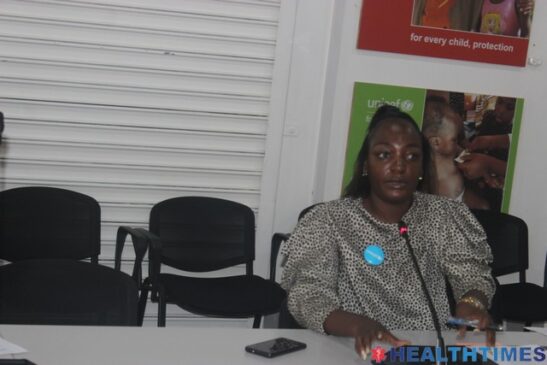
6000 rural boreholes malfunctioning: UNICEF

By Kuda Pembere About 11 percent of the Zimbabwe’s rural boreholes were dysfunctional by August due to increasing use at a time when the country is enduring the effects of the El-Nino driven drought. This was said by United Nations Chidren’s Fund Zimbabwe (UNICEF Zimbabwe) Water, Sanitation and Hygiene (WASH) specialist Tariro Mavi at a press briefing on Wednesday. Mavi said they observed an increase of borehole damage occurring each month.  She said more than 90 percent of the boreholes they surveyed in rural communities have broken down. “So, we’re…

Read More

UNICEF Zimbabwe appeals for US$34m to mitigate El Nino’s impact on WASH

By Kuda Pembere With the El-Nino induced drought severely affecting water sanitation and hygiene (WASH) services in Zimbabwe, the United Nations Children’s Fund (UNICEF)’s is appealing for US$34 million to mitigate the impact of this climate change phenomenon. This appeal comes at a time where with increased funding much could be done to improve WASH for improved access to safe water and improved sanitation and hygiene services which are key to ensuring children’s rights to health, nutrition, education, and protection. Addressing the media, UNICEF representative to Zimbabwe Etona Ekole said…

Read More