Extending Medical Degree Period Will Isolate Zim

Zimbabwe risks isolating itself from existing mutual recognition and relationships with the global and regional medical community through extending the period of medical studies to seven years.   By Kudakwashe Pembere This comes as universities offering the medical degree and students are grappling to come to terms with this directive from the regulator of universities and colleges, the Zimbabwe Council of Higher Education (ZIMCHE). Heaping two more college years on medical students in essence would see them being offered completion certificates after seven years against the globally accepted five. Resultantly,…

Read More

DFID Avails US$5 Mln For Food Assistance In Zim

The United Nations World Food Programme (WFP) has welcomed a £3.95 million (US$5 million) contribution from the United Kingdom’s Department for International Development (DFID) to its 2018/19 Lean Season Assistance programme in Zimbabwe. The contribution will help WFP to provide cash-based food assistance to some 97,000 highly food insecure people in rural areas, and to another 19,000 in a Harare suburb. “We are grateful for this timely commitment, which will allow us to provide immediate, much-needed assistance to some of the most vulnerable people in Zimbabwe,” said Eddie Rowe, WFP’s…

Read More

#DISGUSTING: Teenagers Boiling Used Tampons To Get High

LET me start off by apologizing, because things are about to get really disgusting. The newest teen fad is here, and it’s way worse than eating Tide Pods. Some teens are boiling used tampons in water and drinking the resulting concoction in order to get high. SOURCE: Yahoo Lifestyle Unfortunately, this isn’t a joke. Police all around Indonesia have arrested multiple teens caught using the sanitary devices in order to get high, according to Straits Times. It gets worse (if that’s even possible). Most of the time, these used pads…

Read More

UNDP Affords Solar Power To 405 Health Centres In Zim

A total of 405 health facilities have been equipped with Solar systems to strengthen national systems for healthcare through a project dubbed UNDP’s Solar for Health initiative. HealthTimes Correspondant Under the program, UNDP is supporting the Zimbabwean governments to install solar systems in health centres and clinics in rural areas to reach underserved communities with the aim of ensuring healthcare for all. Solar energy is also contributing to more resilient health systems. In Zimbabwe, in partnership with the government and the Global Fund, UNDP has equipped 405 health facilities with…

Read More

#JUSTIN: Doctors Strike Officially Ends

THE 40 days long industrial action by medical doctors has officially come to an end following government’s commitment to address the doctors grievances. By Michael Gwarisa and Kudakwashe Pembere In an official statement by the Zimbabwe Hospital Doctors Association (ZHDA), they confirmed the development and called on all doctors who had downed tools to resume their work. “ZHDA is delighted to inform the membership, members of the press and public that the industrial action by doctors in Government hospitals has come to an end. “It has been 40 straight days…

Read More

Health Hazard Looms As Fuel Shortages Cripple Harare Garbage Collection

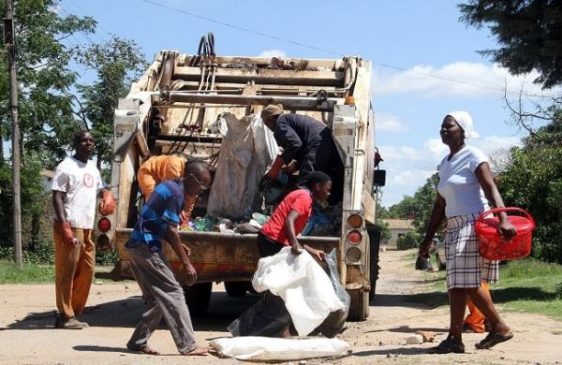
Zimbabwe’s obtaining fuel crisis has forced City of Harare to collect garbage below optimal levels which could pose health risks to Harare residents. By Kudakwashe Pembere Harare City reviewed its garbage collection roaster leaving out some areas unattended leaving residents prone to respiratory conditions, with a typical example being Surat in India, where a pneumonic plague epidemic broke out in 1994, causing 52 deaths. Overflowing and uncollected waste bins are also an ideal breeding ground for bacteria, insects and vermin. Notifying Harare residents via social media platforms like Twitter and Facebook,…

Read More

Zim Ranks 3rd In Global PMTCT Rankings

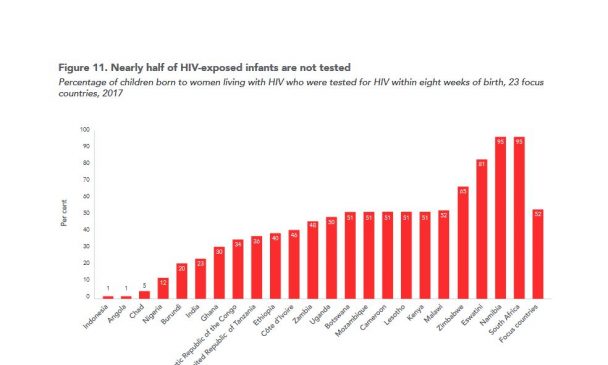
ZIMBABWE has achieve a 65% coverage of children born to women living with HIV who were tested for HIV within eight weeks of birth ranking it 3rd out of the 23 focus countries. According to a UNAIDS report dubbed “Knowledge is Power” antiretroviral therapy for the prevention of mother-to-child transmission greatly reduced new HIV infections among children amidst indications that globally, 1.4 million [880 000–2 100 000] new child infections have been averted since 2010, and in 2017, there were just 180 000 [110 000–260 000] transmissions of HIV from…

Read More

PSI Gets US$95 Million To Fight HIV In Zimbabwe

POPULATION Services International (PSI), was recently awarded US$95 million to scale up HIV response as well as reduce the HIV incidence in Zimbabwe. HealthTimes Reporter The grant is coming through under a new program dubbed “Going the Last Mile for HIV Control” which was granted with support from the President’s Emergency Plan for AIDS Relief (PEPFAR) through USAID and the Zimbabwean Ministry of Health and Child Care (MOHCC). PSI Country Representative, Staci Leuschner said,  “the program will work closely with the MOHCC, as well as other USAID health partners and…

Read More

#BREAKING: Confusion Rocks Doctors Strike…As Some Resume Work

THERE seems to be discord in the striking doctors camp amidst indications that some doctors have already resumed work despite the organisation representing them alleging that those who have resumed work have sold the struggle. By Michael Gwarisa and Kudakwashe Pembere   According to Health Services Board (HSB) executive Chairman Dr Paulinus Sikosana, a health service bipartite negotiating forum was held which led to the two parties agreeing to end the strike after agreeing on certain areas. However, Zimbabwe Hospital Doctors Association (ZHDA) Secretary General, Dr Anele Bhebhe poured water…

Read More

Fiscal Austerity and the health sector

OVER the years, analysis of the Health budget has tended to restrict itself to examining conformity with the Abuja Declaration which state that at least 15% of the national budget must be allocated to health. By Taurai Nyandoro Nonetheless, the approach presents limitations in that it reduces us to celebrate a mere satisfaction of the 15% threshold, without evaluating the salient propositions on specific allocations such as unbalanced appropriations in favour of policy and administration versus direct service delivery and value for money. The latter becomes important taken in light…

Read More