By Retlaw Matatu Matorwa Health equity remains one of the most pressing challenges faced by marginalized communities in Zimbabwe. Improving health equity is not only a moral obligation but also a critical component of promoting social justice, fostering economic development, and creating a more equitable society. Marginalized communities in Zimbabwe are those who face systematic disadvantages, such as poverty, low education, rural residence, sex, and ethnicity. These communities experience higher rates of disease and mortality compared to the rest of the population, and they are more likely to experience barriers…
Read MoreAuthor: Healthtimes
Zimbabwe AVAC Fellow Wins BIG
This month marks one year since Onward Chironda become an AVAC fellow for Zimbabwe. Onward who is a renowned youth leader and advocate for the Health, Rights, and well-being of young people in their diversity became a fellow in 2022. By Staff Reporter Onward is part of the fellowship among other fellows in South Africa, Uganda, Botswana, Zambia, Malawi, and Kenya who are doing similar work in advocacy and engagement work to ensure that duty bearers in terms of governments and civil society actors are held accountable for guaranteeing the…
Read MoreEnhancing preparedness to tackle rising zoonotic diseases in Africa
The ongoing Marburg virus disease outbreaks in Equatorial Guinea and Tanzania are the latest of several zoonotic diseases reported in the African region. The region has seen an increase of such outbreaks, recording a 63% rise between 2012 and 2022 compared with the previous decade. Zoonotic diseases represent approximately 32% of the region’s infectious disease outbreak reported between 2001 and 2022. Dr Tieble Traore, Emergency Preparedness Technical Officer at WHO Regional Office for Africa, explains how African countries should prepare to effectively respond to zoonotic disease outbreaks such as Marburg.…
Read More1 in 6 people globally affected by infertility: WHO
Large numbers of people are affected by infertility in their lifetime, according to a new report published today by WHO. Around 17.5% of the adult population – roughly 1 in 6 worldwide – experience infertility, showing the urgent need to increase access to affordable, high-quality fertility care for those in need. By Own Correspondent The new estimates show limited variation in the prevalence of infertility between regions. The rates are comparable for high-, middle- and low-income countries, indicating that this is a major health challenge globally. Lifetime prevalence was 17.8% in…
Read MoreDemystifying safe abortion: Getting the FACTS right!
By Memory Pamella Kadau The issue of abortion is often sensitive and divisive. It separates opinions, and this is mostly due to ignorance of the facts surrounding this subject. This article looks at some of the popular MYTHS surrounding abortion and sets out the FACTS as part of enriching debate on the topic. In doing so, the article will pose a question and then highlight a popular myth which and will then counter with factual information from science and practice. What is abortion? Myth: There is tendency by anti-abortionists that…
Read MoreWHO and the Inter-Parliamentary Union launch a new handbook on Universal Health Coverage
The World Health Organization (WHO) recently participated in a number of joint activities at the 146th Inter-Parliamentary Union (IPU) Assembly which took place from 11-15 March 2023 in Manama, Bahrein. By Staff Reporter This collaborative work included the launch of the IPU-WHO Handbook on Universal Health Coverage (UHC), which follows up on the 2019 IPU resolution on UHC. The handbook aims to introduce parliamentarians to the concept and importance of UHC and describe the key roles Members of Parliaments (MPs) can play to make progress by offering practical and actionable…
Read MoreWHO Publishes New COVID-19 Vaccination Guidelines
THE World Health Organisation’s (WHO’s) Strategic Advisory Group of Experts on Immunization (SAGE) has since revised the roadmap for prioritizing the use of COVID-19 vaccines, to reflect the impact of Omicron and high population-level immunity due to infection and vaccination. By Staff Reporter The roadmap continues SAGE’s prioritization of protecting populations at the greatest risk of death and severe disease from SARS-CoV-2 infection and its focus on maintaining resilient health systems. The roadmap newly considers the cost-effectiveness of COVID-19 vaccination for those at lower risk – namely healthy children and…
Read MoreABSA, Standard Bank agree US$193m funding deal to build new Zimbabwe hospitals
Zimbabwe is to raise US$193 million in offshore lending to implement a 2019 agreement with UK infrastructure company NMS for the construction of hospitals and clinics in the country. NEWSWIRE ABSA and Standard bank of South Africa are the joint arrangers for the transaction, which will be insured by Export Credit Insurance Corporation of South Africa. The original contract saw NMS building clinics at Stoneridge in Harare and Cowdray Park in Bulawayo. The initial phases of the project, which also include four other hospitals, have been funded by the Zimbabwe…
Read MoreInsect Porridge to Enhance Children Nutrition in Africa
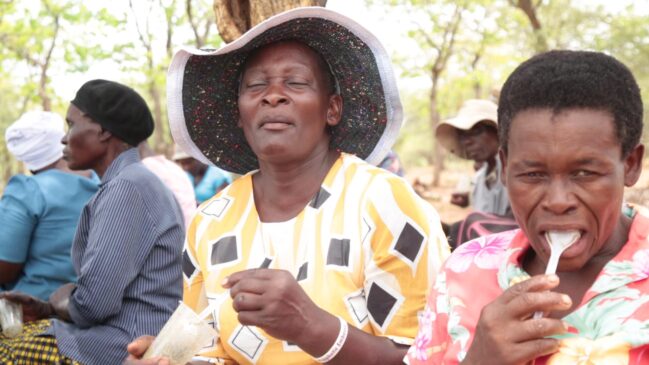
By Bird Story Agency – Learnmore Nyoni January winds blow through mopane forests of Gwanda district in Zimbabwe’s Matebeleland South province. Silibaziso Dube buckles up her waist wrap as she kneels down to blow life to the dying flames at a makeshift fireplace where a large tin of water sits precariously on two rocks. Tswaranang Mashonja Community Group members have gathered to taste a new mopane worm based instant porridge developed by the Insects4Nutrition research team. Dr Lesley Macheka is the Director for Innovation and Industrialisation at Marondera University of…
Read MoreZACH Rallies Media to Amplify Voices of Adolescents Girls and women at risk of GBV
NEW HIV infections being recorded in Adolescent Girls and Young Women (AGYW) in Zimbabwe could be linked to harmful practices such as Gender Based Violence (GBV), Child Marriages and sexual abuse obtaining in the country, the Zimbabwe Association of Church related Hospitals (ZACH) has warned. By Michael Gwarisa UNAIDS data shows that Adolescent Girls and Young Women from sub-Saharan Africa, aged 15-24, remain at substantial risk of acquiring HIV and in 2021, they accounted for 63% of all new HIV infections in 2021 largely due to biological, socio-economic, religious, and…
Read More