Misuse of medicines is making infections difficult to treat

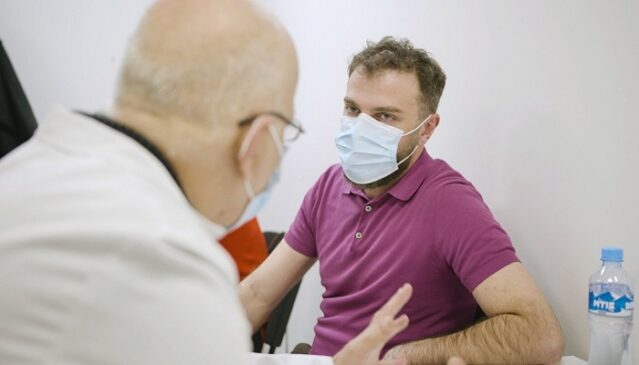
World AMR Awareness Week #WAAW2023 is observed globally: 18th to 24th November Antimicrobial resistance (AMR) occurs when bacteria, viruses, fungi and parasites change over time and become resistant to (or no longer respond to) medicines, making infections harder to treat and increasing the risk of disease spread, severe illness and death. As a result of drug resistance, medicines become ineffective, and infections become increasingly difficult or impossible to treat. That is why AMR ranks among the top ten global health threats worldwide. Antimicrobial Resistance (AMR) is a problem driven by…

Read More

Safer, Shorter, And More Effective Treatment Discovered For Tb

· Breakthrough research presented at The Union World Conference for Lung Health includes new drug with potential to shorten and improve treatment for nearly all forms of TB; · Trial is underway for “universal regimen” for drug-sensitive and drug-resistant TB; · New research suggests that rats are able to detect TB; · Pioneering battery-operated tests herald new opportunities for rapid diagnostic capabilities Paris; November 16th 2023: Researchers have announced a drug that has the potential to shorten and improve treatment for nearly all forms of TB, on the second day…

Read More

Zimbabwe’s Blood Bank to collect over 13,000 Blood Units during Festive Season

The National Blood Services of Zimbabwe (NBSZ), has set an ambitious target to collect 13,370 blood units during the upcoming festive season, at the back of innovative programs targeting existing and new blood donors. By Michael Gwarisa The festive season in Zimbabwe is largely associated with increased road accidents that result in high demand for blood and blood products. The Festive season also coincides with school closures and depressed blood collections since schools are the blood bank’s major blood collection sources. According to NBSZ, should they meet their festive season…

Read More

WHO updates guidelines on treatments for COVID-19

Updated risk rates for hospital admission in patients with non-severe COVID-19 The guidance includes updated risk rates for hospital admission in patients with non-severe COVID-19. The current COVID-19 virus variants tend to cause less severe disease while immunity levels are higher due to vaccination, leading to lower risks of severe illness and death for most patients. This update includes new baseline risk estimates for hospital admission in patients with non-severe COVID-19. The new ‘moderate risk’ category now includes people previously considered to be high risk including older people and/or those…

Read More

Working under the sun causes 1 in 3 deaths from non-melanoma skin cancer, say WHO and ILO

Nearly 1 in 3 deaths from non-melanoma skin cancer is caused by working under the sun, according to joint estimates by the World Health Organization (WHO) and the International Labour Organization (ILO) published today. The research released in Environment International finds that outdoor workers carry a large and increasing burden of non-melanoma skin cancer and calls for action to prevent this serious workplace hazard and the loss of workers’ lives it causes. According to the joint estimates, 1.6 billion people of working age (15 years or older) were exposed to…

Read More

Polio Detected in Zimbabwe Sewages

Health authorities in Harare, the capital of Zimbabwe have detected a vaccine-derived Poliovirus type 2 (Cvdpv2) circulating in the sewage system in high-density suburbs of Budiriro, Crowbrough, Mbare, and Mufakose. By Michael Gwarisa According to the World Health Organisation (WHO), Vaccine-derived poliovirus is a well-documented strain of poliovirus mutated from the strain originally contained in Oral Polio Vaccine (OPV). OPV contains a live, weakened form of poliovirus that replicates in the intestine for a limited period, thereby developing immunity by building up antibodies. In Harare the poliovirus was detected through…

Read More

HIV among the elderly, a unique emerging Public Health Concern in Zimbabwe

Gogo Chiware (78) (Not her real name), lives with her elderly husband in Hatfield, Harare. She has been living with HIV for the past 15 years and she has been on treatment for 13 years now. However, due to her advanced age, she at times forgets to take her Antiretroviral (ARV) medications. By Michael Gwarisa She has a poor support system as her husband who is also living with HIV, is now experiencing dementia and this compounds Gogo Chiware’s woes as there is no one to remind her to take…

Read More

ICASA To Proceed As Planned…Cholera Outbreak Under Control

The Ministry of Health and Child Care (MoHCC) says they have identified most cases and initiated patients on Cholera treatment and care, allaying any fears of a full-blown cholera outbreak of the proportions of 2008/09. By Michael Gwarisa Zimbabwe has been recording sporadic and isolated cases of Cholera mostly in rural communities and some peri-urban centres over the past few months, raising fears in some circles that the outbreak could derail hosting of the international Conference on AIDS and SITs in Africa (ICASA), slated for December 4 to 9 2023.…

Read More

Zimbabwe To Use Dual Prevention Pill That Protects Against HIV Infection and Unintended Pregnancy

In a bid to widen HIV prevention and contraceptive options for women and girls, Zimbabwe could be adopting a revolutionary Dual Prevention Pill (DPP), in the not so distant future. By Michael Gwarisa The Dual Prevention Pill adds to the list of other Biomedical HIV prevention tools Zimbabwe has adopted over the past few years which include  the Dapivirine Vaginal ring that was adopted in 2021 and the Long-Acting Injectable PrEP that was approved for use in 2022. However, roll-out of these products is yet to commence in Zimbabwe. Speaking…

Read More

Decentralize Cancer Screening…Fund Treatment and Care

By Fiona Tinarwo In May this year, I had an opportunity to be part of a team that facilitated a mobile outreach clinic in Chimanimani in partnership with Mutambara Mission Hospital. One of the most important service on offer was cervical cancer screening. I met a number of women from the community and had a chance to speak to them about the importance of cervical cancer screening. One lady honestly spoke about life after getting screened and being diagnosed with cervical cancer. She literally spoke about how that could be…

Read More