By Kudakwashe Pembere With just about a fortnight to conclude the discussions of the Pandemic Agreement to help World Health Organization (WHO) member states in strengthening their healthcare systems, the AIDS HealthCare Foundaiton (AHF) is of the notion there are several issues that need to be ironed out. Learning from the disparities which obtained during the COVID-19 pandemic where vaccines were unevenly distributed across the globe, the AHF fears a dejavu should the Pandemic Agreement turn the blind eye to that. The second issue is the issue of the current…
Read MoreCategory: BREAKING NEWS
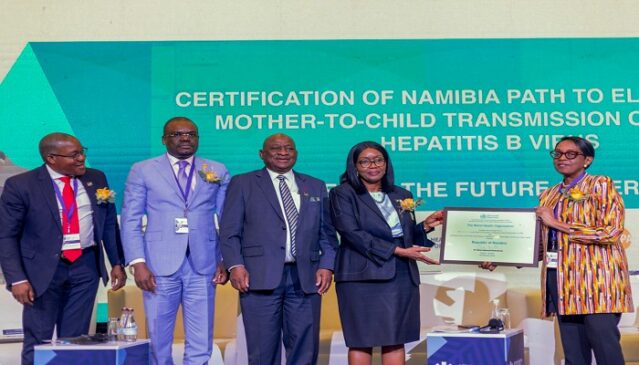
Namibia reaches key milestone in eliminating mother-to-child transmission of HIV and hepatitis B
Windhoek – Namibia has become the first country in Africa – and the first high-burden country in the world – to reach a significant milestone on the path towards eliminating vertical mother-to-child transmission of both HIV and viral hepatitis B. Eastern and Southern Africa is home to more than half the world’s HIV burden and Africa accounts for two thirds of new hepatitis B infections globally. Namibia is home to more than 200 000 people living with HIV and new infections disproportionately impact females. Progress is possible. Globally, 2.5 million…
Read MoreParirenyatwa’s Kangaroo Mother care halves neonatal mortality in a month
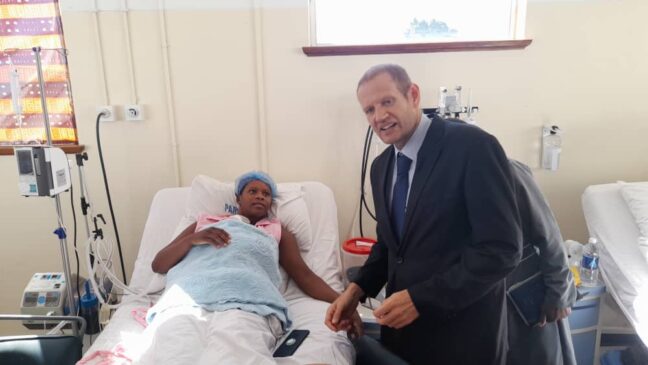
By Kuda Pembere Immediate Kangaroo Mother Care (IKMC) has the ability of halving neonatal mortality as evidenced at Parirenyatwa Group of Hospital’s Mbuya Nehanda Maternity Hospital over the past month. Speaking to journalists during a tour of the IKMC unit, specialist neonatologist Dr Alexander Stevenson explained that preterm babies are instantly placed on the mother’s chest before the umbilical cord is cut. So, here’s my Christian and I have my Christian’s consent to share her story, because in fact we can tell the whole story in just those microcosms here.…
Read MoreGEAR Project Boosts Access To Quality Education For Vulnerable School Girls In Three African Countries
By Michael Gwarisa The GEAR (Girls Education Advocacy in the Region) project, an initiative aimed at enhancing access to quality education, has made significant progress in advancing quality education for girls in Zimbabwe, Zambia and Malawi. Valued at US$828 000, the project is a collaborative effort among four organizations from Malawi, Zambia, and Zimbabwe, termed the GEAR Alliance coordinated by SAYWHAT with support from Education Out Loud. Speaking in an interview with HealthTimes, PraiseGod Masunga, the SAYWHAT Regional Coordinator said the primary goal of the project is to contribute towards…
Read MoreZimbabwe Makes Inroads In Addressing Severe NCDs Through The PEN-Plus Strategy
By Michael Gwarisa According to the World Health Organisation (WHO) data, more than 560 000 avoidable deaths occur annually among the world’s poorest children and young adults with nearly 100 000 of these deaths being caused by only four conditions namely Type 1 diabetes mellitus, sickle cell disease, rheumatic and congenital heart disease. Just like most countries in the Sub-Saharan Africa region, Zimbabwe is experiencing a huge burden in Severe Non-Communicable Diseases which, unlike ordinary NCDs, do not get much public health attention despite them accounting for several deaths every…
Read MoreImproved Combination HIV Prevention Coverage Reduces New Infections In girls and young women in Zimbabwe
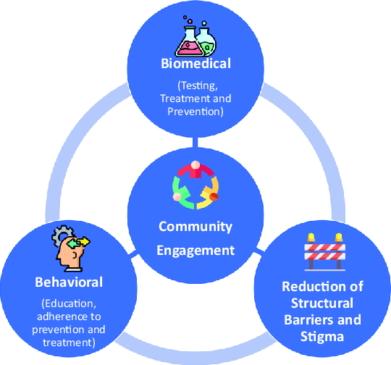
By Staff Reporter Zimbabwe is among nine high-prevalence locations in Sub-Saharan Africa to record a reduction in new HIV infections between 2010 and 2022 owing to increased coverage of combination prevention methods according to findings from a 2023 Global HIV Prevention report UNAIDS defines combination HIV prevention as rights-, evidence-, and community-based programs that promote a combination of biomedical, behavioural, and structural interventions designed to meet the HIV prevention needs of specific people and communities. Its goal is to reduce the number of new infections through activities with a greater…
Read MoreIAS 2025 to take place in Kigali, Rwanda
2 May 2024 (Geneva, Switzerland) – IAS – the International AIDS Society – announced today that IAS 2025, the 13th IAS Conference on HIV Science, will take place in Kigali, Rwanda, from 14 to 17 July 2025. Pre-meetings will be held on 13 July. The conference will spotlight challenges and opportunities in some of the world’s most HIV-affected regions while offering insights gained from other areas of the world. IAS 2025 will serve as a critical reflection point to collectively take stock of how and in what ways the advances in HIV science can…
Read MoreZimbabwe Launches Stage 2 of CATALYST Study, Adding Injectable PrEP to HIV Prevention Options for Participants
By Michael Gwarisa Following the delivery of injectable Pre-Exposure Prophylaxis (PrEP) doses, Zimbabwe through the Maximizing Options to Advance Informed Choice for HIV Prevention (MOSAIC) consortium, has launched stage 2 of the CATALYST study, introducing the newly approved injectable PrEP. The study is funded by funded by PEPFER through USAID. The CATALYST study was initially launched in 2023 where two PrEP methods — tenofovir-based oral pills and the dapivirine ring (PrEP ring) — were offered. The CATALYST sites remain the same six sites where stage 1 was conducted. These include…
Read MoreMedical Aid Industry Representative Body Optimistic About Zig Currency
By Michael Gwarisa The Association of Healthcare Funders of Zimbabwe (AHFoZ), the representative body for the medical aid industry in the country, has thrown its weight behind the newly introduced Zimbabwe Gold (Zig). The new endorsement comes in the wake of mixed reactions following the introduction of the currency, with some players in the medical aid industry raising fears around the sustainability and continuity of the Zig currency since it was launched through a Statutory Instrument (Statutory Instrument 60 of 2024), which in most cases has a shorter shelf life.…
Read MoreCommunities A Vital Cog In Addressing Severe NCDs In Africa-Dr Benido
By Michael Gwarisa Non-communicable Diseases (NCDs), continue to exert unwarranted pressure on Africa’s healthcare system, with data from the 2022 World Health Organisation (WHO) NCDs progress monitor estimating that between 50 percent and 88 percent of deaths being recorded in seven African countries, mostly small island nations, are due to non-communicable disease. The UN Sustainable Development Goal (SDG) target 3.4 calls for all Member States to reduce premature mortality from non-communicable diseases (NCDs) by one-third in 2030 through prevention, treatment and promoting mental health and well-being. However, over the years,…
Read More