Zimbabwe Struggles to Meet TB Reduction Target

By Kuda Pembere Zimbabwe’s efforts to curb tuberculosis (TB) infections have shown gradual progress, but significant challenges remain ahead of its 2026 target. The country had set an ambitious goal of reducing new TB infections to 48 per 100,000 people by 2026. As of 2024, however, TB incidence stood at 211 per 100,000, a notable improvement from 240 per 100,000 recorded the previous year. Speaking at a Zimbabwe College of Public Health Physicians (ZCPHP) TB meeting last Saturday, Dr. Rutendo Manyati, representing Dr. Fungai Kavenga, Deputy Director of the AIDS…

Read More

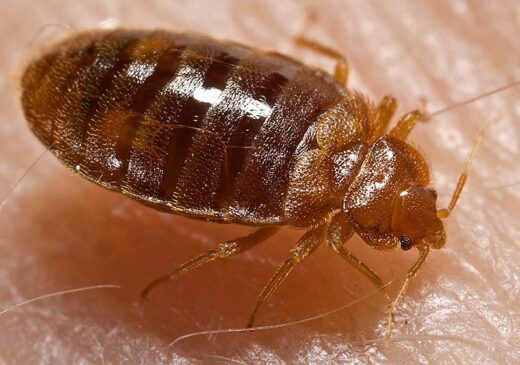
Bedbugs (Tsikidzi) still confined to Mbare: Harare City

By Staff Reporter Contrary to widespread reports that bed bugs (tsikidzi) have spread to other suburbs such as Mabvuku, Glen View, and Budiriro, Harare City says the infestation remains locked-in in Mbare. Providing an update, the local authority said it has deployed a team to verify social media claims about the bugs spreading to other areas. Harare City also noted that it has activated an Incident Management System to coordinate an effective response. “Following the recent bed bug infestation at Mbare Flats, the City Council has activated its Incident Management…

Read More

Zimbabwe Sees 150% Surge in Malaria Deaths by Week 15 Amid Alarming Rise in Cases

By Michael Gwarisa Malaria deaths in Zimbabwe have surged by an alarming 150%, rising from 34 deaths in 2024 to 85 deaths in 2025 by week 15, according to official figures released by the Ministry of Health and Child Care (MoHCC). The country has also recorded a sharp 107% increase in malaria cases, jumping from 17,539 to 36,423 cases over the same period, raising concern over a potential reversal of hard-won gains in malaria control and elimination. The spike in malaria-related illness and fatalities comes as Zimbabwe joins the rest…

Read More

Zimbabwe to Begin HIV Vaccine Clinical Trial in May

By Kuda Pembere A clinical research study to assess the safety and efficacy of a new HIV vaccine is set to begin in Zimbabwe in May this year. The study will be coordinated across three sites: Mutala in Zimbabwe, the Desmond Tutu Health Foundation in Cape Town, and the Africa Health Research Institute in Durban. The research follows findings that countries in sub-Saharan Africa, including Zimbabwe and South Africa, face a high risk of new HIV infections and continue to experience unacceptably high rates of mother-to-child transmission. Speaking to nurses…

Read More

IKE BLE System Proves Effective in Preventing Underage Vaping, New Study Finds

By Michael Gwarisa A new multi-center study has validated the effectiveness of the IKE Bluetooth Low Energy (BLE) System in preventing underage access to Electronic Nicotine Delivery Systems (ENDS), signaling a potential breakthrough in youth vaping prevention efforts. The study was made possible through a partnership between Ispire Technology Inc., an innovator in vaping technology and precision dosing; Touchpoint World Wide Inc., doing business as Berify (“Berify”), a cutting-edge platform that connects physical products to the digital world while enhancing digital engagement and brand protection; and Chemular International Inc. (“Chemular”),…

Read More

Cuts in Health Aid Threaten Global Health Systems – WHO Warns

By Staff Reporter The World Health Organization (WHO) has raised alarm over the growing trend of reduced and suspended Official Development Assistance (ODA) for health, warning that such cuts are already weakening health systems in low- and middle-income countries and placing millions of lives at risk. In its latest report titled “The Impact of Suspensions and Reductions in Health ODA on Health Systems,” WHO says the decrease in global health aid has come at a critical time when many countries are still reeling from the impacts of the COVID-19 pandemic,…

Read More

I Wasn’t Ready to Go Blind’: Zimbabwean Woman Shares Her Glaucoma Battle

By Michael Gwarisa Sixteen years ago, these words shattered Barbara Manjonjo’s world: “I’m sorry, your condition can’t be corrected with eye spectacles. All you can do now is prepare yourself, you’re going to go blind.” This was her optician delivering the devastating news back in 2009. She was only 37 at the time. Today, she is approaching her 53rd birthday. Never in her life had Barbara imagined that she would one day lose her sight and have to rely on her adolescent daughter to hold her hand as she navigated…

Read More

Zimbabwe Launches High-Level Nutrition Advocacy Initiative to Boost Public Awareness and Policy Engagement

By Michael Gwarisa In a move set to enhance public awareness and promote domestic financing for nutrition interventions in Zimbabwe, the Zimbabwe Civil Society Organisation for Scaling Up Nutrition (ZCSOSUNA) has launched a High-Level Nutrition Advocacy and Parliamentary Engagement Project. Funded by UNICEF in collaboration with key government ministries and departments, the 12-month project aims to strengthen nutrition advocacy and deepen engagement with policymakers on child nutrition and development. Speaking at the project’s inception meeting in Harare, Mr. Kudakwashe Zombe, ZCSOSUNA National Coordinator, said the initiative will target 140 parliamentarians…

Read More

The Dark Psychology of Prophets: How Narcissistic Leaders Exploit Mental Health to Control Followers

By Michael Gwarisa Have you ever wondered why a grown man, well-respected in his community, perhaps even holding a doctorate, would roll in the mud and eat grass at the instruction of a self-proclaimed prophet who never finished school? The answer often lies in the psychological forces at play — mental health issues that empower charismatic yet narcissistic religious leaders while disempowering and psychologically entrapping their followers. These leaders often display traits of narcissism, delusion, or sociopathy, while their congregants, whether through trauma bonding, spiritual manipulation, or Stockholm Syndrome, end…

Read More

Why Medical aid societies in Zimbabwe should be regulated by a Health-Focused Authority or body — Not IPEC

By Enock Musungwini, MPH; MBA There are varying definitions and descriptions of what a medical aid is. Medical aid societies, also known as private health insurance companies, are non-profit or for-profit entities that provide health coverage by pooling member contributions to finance medical services. According to Shylet Sanyanga, the AHFoZ CEO, a medical aid is a form of insurance where members pay a monthly fee (called a contribution or premium) in return of financial cover for medical treatment or related medical expenses when the need arises. Medical aid members contribute…

Read More