UK ‘disappointed’ as Robert Mugabe becomes WHO goodwill ambassador

SOURCE: THEGURDIAN UN body appoints Zimbabwean despot to help tackle non-communicable diseases, despite dire health crisis under his rule. The UK government has criticised the World Health Organization’s decision to appoint Robert Mugabe as a “goodwill ambassador”, calling the move “surprising and disappointing”. A Downing Street spokesman said British diplomats had raised serious concerns with the WHO director general, Tedros Adhanom Ghebreyesus, over the decision to offer the high-profile role to the Zimbabwean president. The UN body asked the 93-year-old, who has been in power since 1980, to help tackle non-communicable diseases…

Read More

President Mugabe Appointed WHO Ambassador

HealthTimes Reporter  President Robert Mugabe has been appointed the World Health Organisation (WHO) Ambassador for Africa to help governments tackle chronic diseases such as diabetes, stroke, cancer and heart diseases. President Mugabe will work with national and local politicians to highlight the heavy economic and health burden of non-communicable diseases (NCDs), United Nations health agency said. WHO director-general Tedros Ad-hanom Ghebreyesus said President Mugabe’s appointment would enable governments to “strengthen our response together” to these “major public health challenges”. NCDs and injuries are responsible for 43 million deaths each year, according…

Read More

Midlands Province Successfully Integrates Pediatric ART and Nutrition

By Michael Gwarisa recently in Lower Gweru THE Midlands province has successfully integrated nutrition and paediatric Anti Retro Viral Therapy (ART) programs in a bid to reduce infant mortality as a result of HIV induced malnutrition, a health official has said. Briefing Journalists on the side-lines of a Save the children Nutrition Media Sensitisation Tour of Lower Gweru, Midlands Province District Medical Officer, Dr Shakespeare Mureyano said there was poor uptake of Pediatric ART in the area and as a result, opportunistic infections like diarrhea would attack children who are…

Read More

UNFPA making inroads in restoring ZNFPC’s former glory

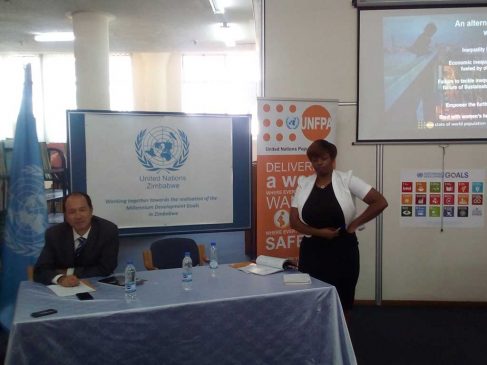
By Kudakwashe Pembere The United Nations Population Fund Zimbabwe (UNFPA) is making headways in returning the Zimbabwe National Family Planning Council to its former glory using various initiatives, an official has said. This was said by UNFPA Zimbabwe assistant Ms Abbigail Msemburi during the launch of the SWOP findings on Wednesday(yesterday). Ms Msemburi went down through memory lane where ZNFPC was a regional family planning powerhouse, a status that went down the drain. “We hear a lot of what ZNFPC used to be like at about independence where it was…

Read More

300 Zim women get fistula treatment

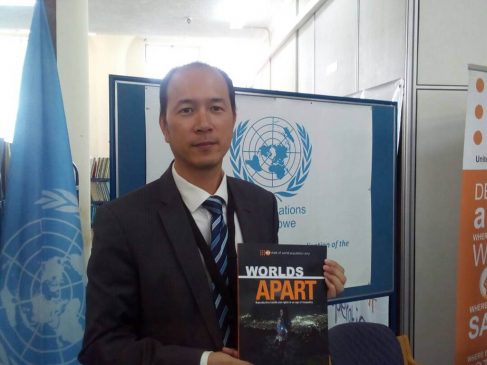
By Kudakwashe Pembere Over 300 Zimbabwean women have received fistula repair surgery since inception in 2009, a United Nations Population Fund (UNFPA Zimbabwe) official said. Addressing media yesterday, UNFPA Zimbabwe Deputy Country Resident Mr Yu Yu said there is one centre offering this surgery. “In Zimbabwe UNFPA is leading the Campaign to End Obstetric Fistula through a collaborative effort with partners, Women and Health Alliance International (WAHA) and the Ministry of Health and Child Care. This journey began in 2009 with support to the Ministry to conduct an obstetric fistula…

Read More

Malnutrition Almost Killed My 2 year Old Baby…Woman Narrates Ordeal

“At that time, she was 1 year 7 months old, I had already introduced her to solid foods, I would say I started feeding her porridge  a day after she was born not knowing it would affect my child…” By Michael Gwarisa recently in Shamva “Mwana anofanira kudya tuporridge tu tete tete, kana tumahewu netumvura kuti asimbe mudumbu, ukaona mwana achiramba kuyamwa anenge achichema zita!” Loosely translated “A new born baby must and should be fed porridge, or traditional non-alcoholic brew or water, if you see your child crying all…

Read More

Zim Musing Upon 8 Antenatal visits for pregnant women

By Kuda Pembere AT the borderline is Zimbabwe trying to consider adopting latest World Health Organisation’s antenatal care guidelines requiring eight antenatal contacts instead of four that the country is currently doing well with. In November last year, WHO recommended that a minimum of eight contacts for antenatal care can reduce perinatal deaths by up to 8 per 1000 births when compared to a minimum of four visits. Sharing findings in the United Nations Population Fund (UNFPA) SWOP report on Wednesday (today), the organisation’s local Assistant Ms Abbigail Msemburi said…

Read More

Selfish MPs want pay rise, ignore critical HIV funding

By Daniel Phiri LEGISLATORS have called on government to increase their salary perks to match that of ministers and the judiciary, at a time when the country is failing to adequately fund the response to HIV/Aids. Owing to alleged financial constraints, Zimbabwe which is spending US$3, 6 billion from its US$4 billion budget on salaries, has literally surrendered its health funding to development partners and donors. About 85 percent of national HIV/Aids response is catered for by development partners and donors, while Zimbabwe is accounting for a mere 15 percent…

Read More

The Power Of Women Support Groups in Scaling Up Nutrition

By Michael Gwarisa recently in Shamva ZIMBABWE witnessed a surge in child malnutrition cases in the years 2015/16 owing to the Elnino induced drought which left millions of Zimbabweans from most parts of the country in need of food aid. According to information gathered by Save the Children Zimbabwe a Non- Governmental Organisation which deals with issues affecting children and their rights, cases of Severe Malnutrition were recorded over the past two years as a result of the droughts and extreme cases were documented in Binga, Chegutu, Kariba, Shamva and…

Read More

AHFoZ decries price hikes in pharmacies

By HealthTimes Correspondent The Association of Healthcare Funders of Zimbabwe (AHFoZ) has expressed concern over the huge increase in the price of drugs at most pharmacies saying this said could only worsen the suffering of patients. In a statement, AHFoZ, which represents the country’s medical aid societies, said over the past three weeks most pharmacies had increased the price of drugs by between 30 percent and 70 percent. This had resulted in huge shortfalls for medical aid society members. Some pharmacies, AHFoZ said, were rejecting medical aid cards and insisting…

Read More