The Daring Five: Zim Female Riders Break Glass Ceiling In Male-Dominated Specimen Transportation Industry

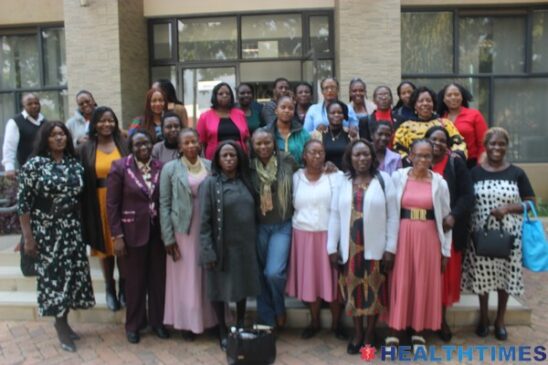
By Michael Gwarisa in Shamva She probably has the most beautiful smile in Shamva, but don’t let that fool you. Rosemary Sibanda is a goal-getter, confident, bold and aiming for greater heights in her career as a rider working under Zimbabwe’s Integrated Specimen Transportation System (IST). Being caregivers, women find it difficult to penetrate male-dominated fields, and in most cases, employers prefer males to females for certain roles. Despite the many years of female activism and women empowerment advocacy, the gender gap in the professional world has not been closed.…

Read More

580,000 Young Children in Zimbabwe At Risk Of Malnutrition

By Staff Reporter Harare, 7 June 2024 – Around 181 million children worldwide under 5 years of age – one in four children – are experiencing severe child food poverty, making them up to 50 per cent more likely to experience wasting, a life-threatening form of malnutrition, a new global UNICEF report reveals today. Among these 580,000 are Zimbabwean children, a number that could rise with the current El Nino induced drought. What and how children are fed in early childhood determines their survival and shapes their growth, development and…

Read More

Zim in poor quality beef production due to fodder challenges

By Kuda Pembere Zimbabwe is losing out on the beef export market for it is largely producing low quality meat, particularly the Economy grade. This has been attributed to the shortage of feed and fodder in the country, coupled with the El Nino induced drought which has claimed about 9000 cattle. This grade ranks the lowest in the classification of beef as the Super grade comes up top, followed by the Choice Grade, and then the Commercial Grade. Experts say when the animal is classified as economy grade, it is…

Read More

Concern over poor ART coverage in Zim children

By Kuda Pembere While hovering above 50 percent in terms Antiretroviral Treatment (ART) coverage amongst children seemingly looks fancy compared to other African countries with coverage as low as 6 percent, Zimbabwe needs to improve to fulfil its promises for the Global Alliance to End AIDS in Children by 2030. Global Alliance to End AIDS in Children by 2030 was launched in Montreal Canada in 2022. To achieve the goal of ensuring that 95 percent of children aged between 0 and 19 know their status, get placed on ART to…

Read More

SAfAIDS Unveils Social Contracting Framework for Effective HIV Response

By Ntokozo Gudu in Mutare SAfAIDS and Zimbabwe Community Health Intervention Research ( ZCHIRe) convened a capacity strengthening dialogue for stakeholders to effectively disseminate and implement the Social Contracting guidelines under the banner of the United for Protection Coalition, in Mutare recently. The dialogue was targeting the National AIDS Council as the key institution for decision making on social contracting, bringing together Civil Society Organizations (CSOs) on how to effectively input into the existing guidelines. The conversation highlighted the need to increase domestic financial resources and expand  revenue streams to…

Read More

14-Year-Olds Selling Sex In Gold Mining Fields: The Ugly Side Of Elnino-Induced Drought In Zimbabwe

By Michael Gwarisa in Kadoma The sun is about to set in Battlefields, a community situated approximately 35 kilometers outside Kadoma City. Behind the police station, a few yards from the railway line, in a makeshift mining settlement, young girls in their early teens appear from all directions, instantly bringing the mining community to life. Young men in tattered and soiled clothes emerge from the mining pits, and one can’t help but notice how popular these young men are with the ladies and young girls. In no time, the young…

Read More

After Dropping Out Of School Due to An Early Marriage, Mhondoro Adolescent Girl Traces Footsteps Back To Classroom

By Michael Gwarisa in Chegutu When COVID-19 hit in 2020, everything came to a standstill as governments worldwide clamped down on services to pave way for the effective management of the disease. Unfortunately, the education sector was also affected, and learning was suspended. This, however, increased the vulnerability of girls from poor backgrounds as many were driven into early marriages to escape from the effects of poverty and hunger that characterised the pandemic period. One such girl is Theresa Garikai (21), from Katawa Village, from Mhondoro Mubaira, Chegutu District, who…

Read More

How Motorbikes Have Bridged Diagnostic and Specimen Collection Gap In Rural Zimbabwe

By Michael Gwarisa in Gokwe, Nembudziya It’s around 12 midday, and the sun is blazing hot despite it being winter in Zimbabwe. There is not much activity, left for the chatter of a few old men seated around a pot of opaque beer at a nearby homestead. From a distance, a buzzing sound like that of bees or hornets approaches from the southern side of Kuwirirana Clinic, a health facility in Gokwe Nembudiziya. As the whirring gets closer, a Biker on a motorcycle emerges from a thick cloud of dust…

Read More

UZ takes SAYWHAT’s SASI Debate championship

By Kuda Pembere After claiming the SAYWHAT Quiz Challenge championship, the University of Zimbabwe’s (UZ) thirst for more saw the institution doubling down, to be crowned the Speak And Solve Initiative (SASI) Debate tournament titleholders Friday afternoon following a heated challenge against the Midlands State University (MSU), National University of Science and Technology (NUST) and Chinhoyi University of Technology(CUT). Trailing the UZ on second position was CUT, with MSU being the second runner up leaving NUST on number four. UZ took the title from Great Zimbabwe University (GZU) which won…

Read More

Amid Zimbabwe’s Mass Exodus, Meet the Doctors and Nurses Who Stayed Behind

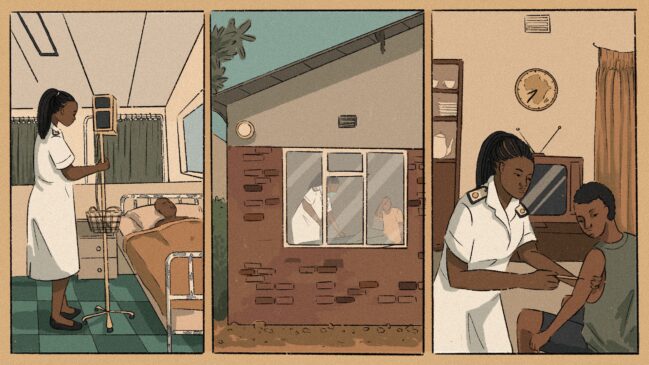
By Gamuchirai Masiyiwa, Global Press Zimbabwe HARARE, ZIMBABWE — At five months pregnant with her second child, Vimbai started bleeding. She suspected a miscarriage and rushed to a public clinic for help. The attending midwife didn’t examine her, says Vimbai, who chose to use her middle name for fear of stigma. “The only thing they did was [give] me cotton wool.” To Vimbai’s shock, the midwife wrote “attempted abortion” on her consultation card and referred her to the nearest public hospital about 20 kilometers away (nearly 12.5 miles). But Vimbai…

Read More