By Michael Gwarisa The future of the United States’ HIV response hangs in the balance after the House Appropriations Committee advanced a spending bill that would slash nearly $2 billion from federal HIV programs. Advocates and public health leaders are warning that if enacted, the cuts could dismantle decades of progress in the fight against HIV and put millions of lives at risk. The proposed Fiscal Year 2026 Labor-HHS appropriations bill eliminates all Centers for Disease Control and Prevention (CDC) HIV prevention funding, amounting to roughly $1 billion. It also…
Read MoreCategory: HIV/AIDS
Dust, Gold, and Infection: Midlands Province Grapples with Mining-Driven HIV Epidemic
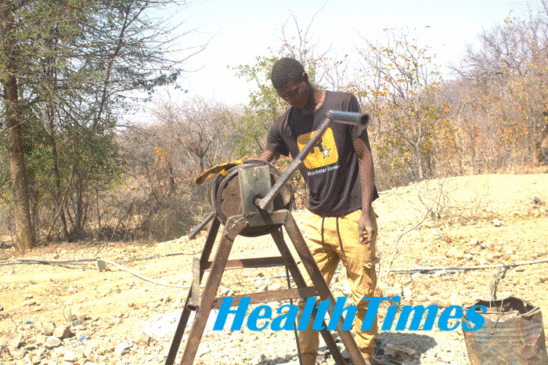
By Michael Gwarisa in Midlands Province As one descends the winding Boterekwa curves in Shurugwi in the Midlands province, the scale of mining activity becomes impossible to ignore. The landscape has transformed dramatically since the turn of the millennium. In the distance, rocks are blasted from the earth, sending thick clouds of dust into the sky. Just past the curves, Musasa Shopping Centre is a hive of activity. Evidence of the night’s revelry litters the open space, with empty beer bottles and used condoms scattered near Chirasha Bar, one of…
Read MoreUNAIDS Welcomes US Move to Expand HIV Prevention Access
By Staff Reporter UNAIDS welcomes the announcement by the US State Department that the President’s Emergency Plan for AIDS Relief (PEPFAR) will be supporting an initiative by the Global Fund to Fight AIDS, TB and Malaria to provide lenacapavir to up to 2 million people in countries with high burdens of HIV. Lenacapavir, an American-based innovation, is one of the most promising new HIV prevention tools that has emerged in the HIV response, offering protection against HIV with just twice-yearly injections. The breakthrough medicine will save thousands of lives if…
Read MoreDonor Funding Cuts Deal Major Blow To Male Circumcision Programs In Midlands Province
By Michael Gwarisa in Gweru The Ministry of Health and Child Care (MoHCC) has warned of a decline in the coverage of Voluntary Medical Male Circumcision (VMMC) in the Midlands province owing to major disruptions in donor funding earlier this year. For more than a decade, Zimbabwe’s VMMC program has relied heavily on external financing, particularly from the President’s Emergency Plan for AIDS Relief (PEPFAR) through the U.S. Centers for Disease Control and Prevention (CDC), as well as grants from the Bill & Melinda Gates Foundation. However, following the freeze…
Read MoreVillage Delivery Turns Deadly: How Home Births in Gokwe Are Fueling New HIV Infections
By Michael Gwarisa in Gokwe South When Sister Farisai Mlambo, the nurse in charge at Katema Clinic in rural Gokwe South, spoke in an interview with HealthTimes on the sidelines of a Prevention of Mother-to-Child Transmission (PMTCT) dialogue, she revealed a chilling case that has unsettled health workers and traditional leaders in the area. “We had an unusual case here, a baby delivered to HIV-negative parents tested HIV positive. Upon further investigation, we discovered that the delivery had been conducted in the village by a traditional birth attendant. The baby…
Read MoreMombeshora Threatens Closure of Private Health Facilities Withholding HIV MTCT Data
By Kuda Pembere Health and Child Care Minister Dr. Douglas Mombeshora has warned private health players who fail to provide data on Mother-to-Child Transmission (MTCT) programs, saying such facilities risk closure. He gave the warning during the National Validation Committee (NVC) Meeting for the Triple Elimination of Mother-to-Child Transmission of HIV, Syphilis, and Hepatitis B in Zimbabwe on Wednesday. “We need the data for planning purposes. So, it cannot be choice to supply data or out of choice. Or it must be then mandatory. Those who do not want to…
Read MoreBedroom Revolution? Condoms That Delay Ejaculation Hit Zim Market
By Michael Gwarisa Zimbabweans are seeing a shift in sexual wellness products as new condoms designed to enhance pleasure and prolong intimacy enter the market. While condoms have traditionally been promoted for preventing sexually transmitted infections (STIs) and HIV, the latest options reflect changing consumer expectations and a growing interest in sexual wellbeing. “By introducing TRUST and LOVERS+ brands, PSH is expanding the range of options available to Zimbabweans, potentially increasing condom use and reducing the risk of sexually transmitted infections and unplanned pregnancies,” said Kumbirai Chatora, the Population Solutions…
Read MoreHarare’s Expanding Sex Work Industry Amid Service Disruptions: A Public Health Time Bomb for Zimbabwe
By Michael Gwarisa In 2024, Theresa*, a 23-year-old from Chitungwiza, turned to sex work not by choice, but out of necessity. Zimbabwe’s faltering economy had left few opportunities for young women like her. What began as a means to survive quickly became a dangerous gamble with her health and safety. “At times, I risk and have unprotected sex,” she admits. “You either agree to it or you lose the client. The market is flooded now, and it’s survival of the fittest.” When she entered the industry, Theresa did not anticipate…
Read MoreTwo Generations, One Battle: Global Fund’s Role in Zimbabwe’s ARV Success
By Michael Gwarisa When Otilia Tasikasni learned she was HIV positive in 1991, she believed her life was over. The diagnosis then was not just a medical statement; it was a countdown. Doctors told her she had only two or three years to live, and every day felt like borrowed time. “At one point, all I would think of was dying,” recalls the 59-year-old, her voice steady but her eyes betraying memories of that period. “Even though I was not sick then or showing any signs of illness, I was…
Read MoreProsecuting HIV Under a Repealed Law Will Take Zimbabwe 20 Years Back Into the Dark Ages
By Michael Gwarisa In May 2022, Zimbabwe took a bold and progressive step by repealing Section 79 of the Criminal Law (Codification and Reform) Act, which criminalised the deliberate transmission of HIV. This repeal was not merely a legislative change, it was a milestone in Zimbabwe’s HIV response, signaling a shift toward science, public health, and human rights. It reflected years of research and advocacy that consistently showed criminalising HIV does not prevent transmission but rather perpetuates stigma, gender inequality, and legal uncertainty. Yet today, a complex and concerning development…
Read More