By Michael Gwarisa A new Global Parliamentary Platform on HIV and AIDS has been established at the ongoing International AIDS Conference in Munich, Germany in a bid to build momentum to end AIDS ahead of the 2030 target. The new platform is set to provide the space, tools, and other resources to unite, strengthen, and amplify the leadership of parliamentarians committed to ending AIDS and new HIV transmissions. From Zimbabwe, over 20 Members of Parliament (MPs) mainly from the Parliamentary Portfolio Committee on Health and Child Care led by Hon…

Read MoreCategory: HIV/AIDS
UN urges Gilead to ‘make history’ with game-changing HIV drug
Gilead could bring the AIDS pandemic towards an end if the US pharmaceutical giant opens up access to its game-changing new HIV drug, the head of UNAIDS told AFP. Winnie Byanyima urged Gilead to “make history” by allowing generic manufacturing of Lenacapavir, a twice-yearly injectable antiretroviral medication used to treat HIV patients. She urged Gilead to open up Lenacapavir to the UN-backed Medicines Patent Pool international organisation, whereby cheaper generic versions could be sold under licence in low- and middle-income nations. Whatever the financial rewards of creating Lenacapavir, the renown of being…
Read MoreHIV vaccines tested in PrEPVacc fail to reduce infections
The results of the PrEPVacc HIV vaccine trial conducted in Eastern and Southern Africa, which ran between 2020 and 2024, show conclusively that neither of the two experimental vaccine regimens tested reduced HIV infections among the study population. Vaccinations in the PrEPVacc trial were stopped in November 2023 (and publicly announced in December 2023) when it became clear to independent experts monitoring the study data that there was little or no chance of the vaccines demonstrating efficacy in preventing HIV acquisition. The PrEPVacc vaccine trial results, announced today at AIDS…
Read More“Ending AIDS is impossible if we do not prioritize children” – EGPAF
By Staff Reporter MUNICH, GERMANY – 22 July 2024 – The UNAIDS Global Report, “The Urgency of Now: AIDS at a Crossroads,” released today, says “ending AIDS as a public health threat is achievable by 2030 but that success is being threatened by pushes to reduce funding and to restrict human rights.” Challenges faced by children living with HIV are among the most significant threats to progress. “The report clearly shows that truly ending AIDS is impossible if we do not prioritize children,” said Elizabeth Glaser Pediatric AIDS Foundation (EGPAF)…
Read MoreUS Government to hold talks with Zim for sustainable condom programming funding
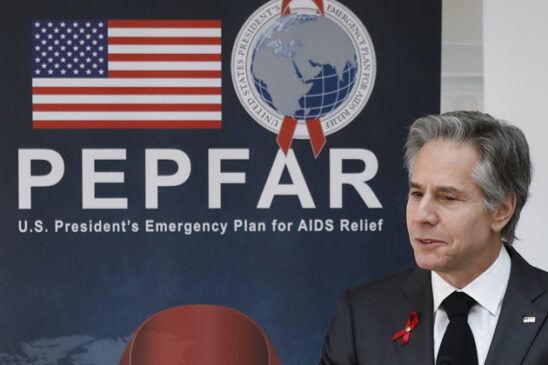
By Kuda Pembere The United States Government will hold talks with the Zimbabwean Government pending the withdrawal of condom programming support via the President’s Emergency Plan for AIDS Relief (PEPFAR) in 2026. Public sector condoms in Zimbabwe are mainly funded via PEPFAR which occupies the majority of the market share at 77 percent followed by social marketing condoms with 22 percent and the private sector having 1 percent. While condom programming remaining a core component of the five UNAIDS preventive pillars, the new US Ambassador to Zimbabwe Pamela Tremont at…
Read MoreVisa disaster looming ahead of International AIDS Conference in Munich
Delays in visa processing at German embassies put the participation of people from countries of the global South and of people from vulnerable communities in jeopardy. Deutsche Aidshilfe is now calling for political action. The conference of the International AIDS Society IAS is the world’s largest congress on scientific, socio-political and civic aspects of HIV. More than 15,000 scientists, doctors, other health care professionals and activists from over 175 countries are expected to attend #AIDS2024 in Munich from July 22 to 26, 2024. However, several activists have been reporting that…
Read MoreSTIs Time-Bomb for Zimbabwe: Majority of STI carriers are asymptomatic and undiagnosed
By Michael Gwarisa The burden of Sexually Transmitted Diseases (STIs) in Zimbabwe has been increasing over the past few years amidst indications that the majority of infected persons do not show any symptoms and could be spreading the STIs unknowingly. According to official data from the Ministry of Health and Child Care (MoHCC), the number of STIs recorded annually has been on the increase since 2018, and majority of cases are being recorded in women. The National Coordinator STI Prevention and Condom Distribution in the Ministry of Health and Child…
Read MoreBiden administration plans major cuts to AIDS relief programs in Africa
The Biden administration plans to cut funding by more than 6 percent in fiscal 2025 from the President’s Emergency Plan for AIDS Relief, the 21-year-old program credited with saving millions of lives in Africa, a senior PEPFAR official told POLITICO. The State Department, which oversees the program, confirmed the cuts. The department has gradually spent down a glut in the PEPFAR budget from years in which funding from Congress exceeded State’s ability to spend it, said a department spokesperson who, like the PEPFAR official, was granted anonymity to discuss sensitive…
Read MorePolygamous Communities Have Lowest HIV Burden In Zimbabwe
By Michael Gwarisa HIV estimates in Zimbabwe show that HIV prevalence and the number of new infections in communities that practice polygamy are lower compared to other settings, HealthTimes has learnt. The HIV response in Zimbabwe emphasizes the need for sexually active individuals to have not more than one sexual partner as having multiple concurrent partners increases the risk of HIV infection. Numerous studies have been conducted in other parts of Sub-Saharan Africa showing that polygamy was a risk factor for new HIV infections. However, it seems some cultural practices…
Read MoreZimbabwe’s Mhuri/Imuli II and SHASHA Projects Get US$25 Million Jab
By Michael Gwarisa in Rusape The United States Agency for International Development (USAID), has launched two projects with a combined value of US$25 Million in a bid to improve the lives of mothers, babies, and young women in Zimbabwe. The two projects, Mhuri Imuli II and the Sexual Health Services program (SHASHA) programs will be implemented over the next five years. The Mhuri/Imuli II is set to expand its geographic coverage and strengthen health services for mothers and babies to five provinces namely Manicaland, Masvingo, Midlands, Matabeleland South, and Mashonaland…
Read More