Leveraging Private Sector to Reduce Unsafe Abortions

Dr Munyaradzi Murwira Due to the restrictive abortion laws in Zimbabwe, both medical and non-medical individuals clandestinely perform most of the abortions. Legal and administrative barriers coupled with stigma among both women and health service providers, and fear of social repercussions as well as risking imprisonment are barriers to access legal abortion in Zimbabwe. The legal termination of pregnancy is performed only in public health facilities at district, provincial and central hospitals, after authorisation from the magistrate. Rather than reduce abortion incidence, the restrictive abortion laws result in women pursuing…

Read More

Key highlights of Zimbabwe’s CAC guidelines and next steps

By Memory Pamella Kadau Introduction Zimbabwe’s recently updated and adopted Comprehensive Abortion Care (CAC) Guidelines. However, the legal framework remains the biggest stumbling block to access to safe abortion under the Termination of Pregnancy (ToP) Act. The article focuses on key aspects of the CAC guidelines, such as consent and counselling, medical eligibility for post-abortion care, infection prevention and control strategies, and standard precautions. Additionally, the article suggests advocacy initiatives that are necessary to facilitate the effective implementation of these guidelines, thereby enhancing abortion care and supporting women’s bodily autonomy.…

Read More

Op-ed for International Women’s Day: “Inspire Inclusion: Combating HIV, Advancing Rights”

By Jane KALWEO The world is significantly off course in meeting the gender targets set by the Sustainable Development Goals (SDGs). At the current pace, it will take an estimated 300 years to eradicate child marriage, 140 years to achieve equal representation of women in positions of power and leadership in the workplace, and 47 years to attain equal representation in national parliaments. As of December 2023, women’s representation in Zimbabwe’s Parliament stood at 34%, falling short of global targets on gender parity in legislative bodies. However, evidence has shown…

Read More

Why Zimbabwe Needs a Multidisciplinary and Inclusive Public Health Association

By: Enock Musungwini, MPH, MBA Public health associations play a crucial role in advocating for measures to improve the health and well-being of populations. They work collaboratively with governments, civil society organizations, and various stakeholders to address national and global health challenges. Unfortunately, Zimbabwe lacks a multidisciplinary public health association, which is a significant weakness for the country. In the context of public health, a multidisciplinary association is one that includes professionals from various fields, such as epidemiology, biostatistics, environmental health, health policy and management, political science, social and behavioral…

Read More

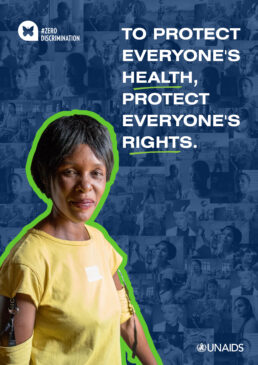
To protect everyone’s health, protect everyone’s rights

 By Jane KALWEO This Friday1 March 1is Zero Discrimination Day, established ten years ago by UNAIDS to protect the rights of everyone and build healthier societies. The evidence is clear: only by protecting everyone’s rights, can we protect everyone’s health. There is much to celebrate. Zimbabwe is one of the few countries in sub-Saharan Africa which has reached and surpassed the 95–95–95 targets. The country has reached 95 percent for the number of HIV-positive people knowing their status,98 percent of HIV-positive people on ART and has reached the target of…

Read More

Power of Movement building in protecting women and girls against unsafe abortion: Op Ed

Mildred Mushunje, PhD The struggle for the recognition of women’s rights is one that has been fraught with backlash, including those arising out of patriarchal privileges and misogynistic ideals. Various movements including Feminist movements have risen to challenge these ideals. The movements have been multiverse and varied but they generally have the goal of addressing women’s gender subordination, the roots of women’s oppression, how gender inequality is perpetuated, and offer differing remedies for gender inequality. Such movements have also found expression in instruments such as The Convention on the Elimination…

Read More

Join the Conversation! HIFA Launches Alcohol Use Disorders Working Group Discussions

Enock Musungwini, MPH; MBA According to the World Health Organization, alcohol consumption contributes to 3 million deaths each year globally as well as to the disabilities and poor health of millions of people. Furthermore, harmful use of alcohol is responsible for 5.1% of the global burden of disease. Against this background, we are calling all Public Health Practitioners, Key Stakeholders, Health Advocates, and Concerned Individuals to the launch of the Health Information for All (HIFA) Alcohol Use Disorders (AUD) Working Group discussions. This is your chance to be part of…

Read More

Zimbabwe Revision of Comprehensive Abortion Care Guidelines a positive step towards addressing high maternal morbidity and mortality

By Memory Pamella Kadau Zimbabwe’s recent revision of its Comprehensive Abortion Care Guidelines marks a significant step forward in addressing the persistent challenge of high maternal morbidity and mortality linked to complications of abortion (Zimbabwe Ministry of Health and Child Care, 2023). Despite previous efforts, the burden remains evident, with abortion complications ranking as a major cause of maternal deaths in both rural and urban settings, according to a community-based study conducted by the Zimbabwe National Health Department (Zimbabwe National Health Department, 2022). This study further revealed that abortion complications…

Read More

Women Organisations Should Prioritize Self-Care Programmes

By Edinha Masiyiwa In my 20 years of experience promoting and defending women’s rights, I have observed that many women, including myself, work without resting. It was only recently in December 2023 when I enrolled in a “How Women Lead” fellowship programme that I reflected on how much I have focused on work without paying particular attention to self-care. I am now on treatment for high blood pressure and it was probably a lack of self-care during my 40s that contributed to this development. In many spaces, I have heard…

Read More

Hope on the Horizon for Zimbabwe as health Ministry Signs Comprehensive abortion Care Guidelines

By Edinah Masiyiwa The Acting Chief Director for Public Health, Dr W Nyamayaro, has signed off on the National Comprehensive Abortion Care (CA) Guidelines for Zimbabwe after more than a year waiting period. These guidelines follow the World Health Organisation’s Post Abortion Care Guidelines of 2022.  These guidelines will go a long way in saving many women and girls’ lives in Zimbabwe through comprehensive abortion care. The CAC guidelines articulate the burden of unsafe abortion on the health delivery system as they highlight that each year, 4.7–13.2% of maternal deaths…

Read More