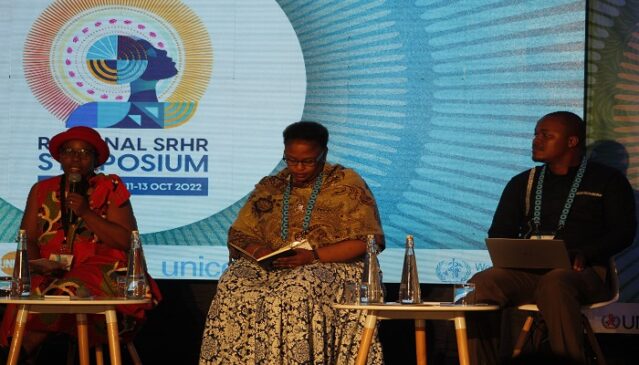
DURING the opening session of the East and Southern Africa regional SRHR symposium in Victoria Falls, Zimbabwe, United Nations Population Fund-East and Southern African Region (UNFPA-ESARO)) Deputy Regional Director, Chinwe Ogbonna called on regional leaders and implementers of Sexual Reproductive Health and Rights (SRHR) to devise new strategies to protect the gains that have been attained in as far as SRHR is concerned. By Michael Gwarisa The symposium is running under the banner of the Joint UN Regional 2gether 4 SRHR Programme which combines the unique strengths and contributions of…
Read MoreCategory: REPRODUCTIVE
All set for Inaugural Zim Reproductive Health Arts festival
SAYWHAT, a youth and student centered organisation which works around sexual reproductive health (SRH) says they are ready to host the creative Reproductive health arts for transformation (CRAFT) festival on the 22nd of October 2022 in Harare. By Patricia Mashiri The CRAFT is a national event that brings together winners of The CHASE competition drawn from all provinces around Zimbabwe. Its participants are first position winners in poetry, drama, music and public speaking. A total of 36 winners from across provinces will be participating at the festival. Running under the…
Read MoreRegional Sexual and Reproductive Health Rights Symposium Kicks-off In Victoria Falls, Zimbabwe
OVER 20 African countries are gathered in the resort town of Victoria Falls to deliberate on issues around access to Sexual Reproductive Health and Rights (SRHR) for young people with the aim of finding a lasting solution to teenage pregnancies, gender-based violence, and HIV infections in East and Southern Africa. By Michael Gwarisa in Victoria Falls The three day regional symposium which will run up to Thursday, October 13, 2022 has been organized by the UNAIDS, UNFPA, UNICEF and WHO under the banner of the Joint UN Regional 2gether 4…
Read MoreInfertility on the rise in Zimbabwean Men
THERE is currently an increase in infertility in Zimbabwe owing to a myriad of factors ranging from anatomical, environmental, dietary/weight and physiological factors, reproductive health experts have warned. By Michael Gwarisa Infertility, which is defined clinically as failure to conceive after 12 months or more of regular unprotected sexual intercourse affects approximately 48.5 million couples globally. Data from a cross section study by consultant Obstetrician, Dr Mugove Madziyire et al which explored “The causes of infertility in women presenting to gynaecology clinics in Harare, Zimbabwe” shows that half of the causes…
Read MoreZimbabwe Health Journalists Trained On Sensible Infertility Reporting
ZIMBABWE’S First Lady, Dr Auxillia Mnangagwa in partnership with the Merck Foundation and the Zimbabwe Union of Journalists (ZUJ), hosted a half day training to sensitise Zimbabwean Journalists on issues around fertility and infertility. By Michael Gwarisa The development comes in the midst of a growing burden in fertility related complications in both women and men in Sub-Saharan Africa largely driven by lifestyle related health conditions and Non Communicable diseases (NCDs). Giving her remarks during the training, Merck Foundation Chief Executive Officer, Dr Rasha Kelej said there were numerous risk…
Read MoreAs International Safe Abortion Day Draws Closer, Its Time To Reflect on progress towards access to safe abortion for women and girls
The 28th of September is International Safe Abortion Day, and it has two themes: “Diverse Actions, Different Places, One Demand: Access to Safe and Legal Abortion Now” and “Abortion in Uncertain Times.” By Edinah Masiyiwa These themes speak to me as an advocate for sexual and reproductive health and rights, and they give me energy to continue working on safe abortion access. They communicate that firstly, we will achieve access to safe abortion through working in our different spaces from research, to advocacy, to awareness raising at community and policy…
Read MoreZim Maternal Mortality Ratio Declines Further
THE number of maternal deaths per live births, multiplied by a conventional factor of 100,000, also known as Maternal Mortality Rate (MMR), has declined to 363 per 100,000 live births in births in Zimbabwe. By Michael Gwarisa This indicates a 6% decline from the previous 2012 MMR ratio of 525. Presenting Preliminary Findings on Mortality from the 2022 Population and Housing Census, Zimbabwe National Statistics Agency (Zimstat) Director General, Dr Taguma Mahonde said, “It should be noted that maternal deaths were reported by households and not by place of occurrence.…
Read MoreMusasa One Stop Centre Assists 500 GBV Survivors
THE Hopley One Stop Centre being run by Musasa Project through support from the UNFPA and the ministry of Women Affairs, Community Development, has served a total 500 women and girls who experienced GBV and other forms of violence over the past 10 months. By Michael Gwarisa Hopley has a high incidence of GBV as well as other harmful practices such as Child Marriages and teenage pregnancies which are at 18% respectively while 70% of women in Hopley are mothers by age 24. Speaking during a visit to centre by…
Read MoreAbortion policy and the vicious cycle of poverty
By Memory Pamella Kadau The previous instalment submitted that abortion doesn’t bring about a moral dilemma as middle ground propagation would argue. It’s clear that safe abortion services should be made accessible to women and this demands policy and legal reforms. This article explored how existing policy framework on abortion perpetuates the vicious cycle of poverty on women and fuels child sexual abuse termed ‘child marriages’. Abortion and poverty Poverty wears the face of a woman and the untold story is that hundreds of thousands of women are trapped in…
Read MoreWe need to avert teen pregnancies in SADC to build back better
The 2gether 4 SRHR programme (UNAIDS, UNICEF, UNFPA, and WHO) in partnership with the Clinton Health Access Initiative, hosted a dialogue on high-impact practices on 11 September 2022, to avert teen pregnancies in the SADC region. By Staff Reporter The hybrid discussion was a call to action for decision-makers and public health professionals to ensure teenage pregnancy is curbed. University of Cape Town researcher Silinganisiwe Dzumbunu highlighted that key drivers of teenage pregnancy include poverty, natural disasters and climate change that lead to food and resource insecurity, and harmful cultural…
Read More