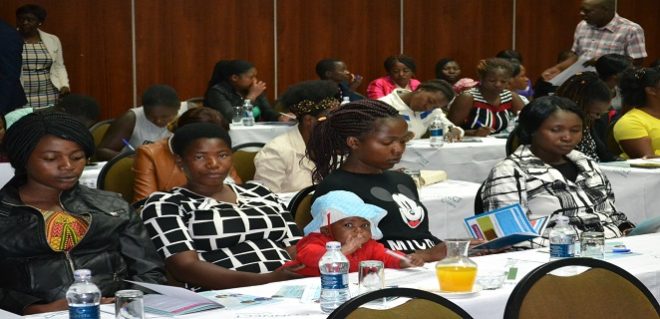
ZIMBABWE is still struggling to cope with growing cases of maternal deaths and complications with statistics indicating that young girls aged 10 to 13 being the biggest victims. By Michael Gwarisa According to the UNFPA National Adolescent Fertility Study of 2016, in Zimbabwe the fertility for adolescent women aged 15-19 years was 115 births per 1,000 women of the same age in 2015. The report also indicated that although fertility rates among women aged 20 years and above in Zimbabwe have fallen over the last two decades, adolescent pregnancy …
Read MoreCategory: REPRODUCTIVE
Unpacking Youth Friendly Family Planning Access With ZNFPC
ZIMBABWE joined the world in commemorating World Contraceptive Day on Spetember 26, 2018. The day is celebrated every year for the purposes of lobbying and advocating for action for improved access and knowledge about Family Planning. The 2018 theme was, “It’s your life: it’s your responsibility”. Family Planning is a key pillar to ensure safe motherhood. Access to information and services enables women and men the voluntary ability to space births, benefiting the mothers’ and children’s health and the community as a whole. It also reduces the risk of…
Read MoreCondoms In Schools Could Reduce Illegal Abortions
EXPANDING contraceptives coverage to schools and other at risk populations could reduce the number of deaths and complications as a result of illegal abortions, a parliamentarian has said. By Michael Gwarisa In an interview with HealthTimes on the side-lines of the World Abortion Day celebrations, legislator and former parliamentary committee on health chair, Dr Ruth Labode said contraceptive services were not getting to adolescents and young girls despite the fact that they are the most sexually active and at risk of unwanted pregnancies. “Our biggest problem in Zimbabwe is…
Read MoreHOPE Zimbabwe Integrates Boys/Girls SRHR Issues
INTEGRATING girls and boys Sexual Reproductive Health Rights (SRHR) issues could go a long way in ensuring gender equality and tolerance, a Hope for Adolescents and Youth Zimbabwe official has said. By Michael Gwarisa In an interview with HealthTimes on the sidelines of the ongoing SRHR workshop, Hope Zimbabwe Vice Board Chair, Mrs Ratidzai Ndlovu said leaving boys behind in the quest to achieve gender equality was tantamount to “shooting ourselves in the foot.” “Girls have a lot of disadvantages because of the gender issues, this is why we incorporate…
Read MoreOf Sex Work and Dangerous , Illegal Abortions
SEX work the world over, is tagged the oldest profession in the history of mankind, having manifested itself in the most ancient and primitive societies, the trade was popular in ancient Egypt and Greece, where it was practiced at various socioeconomic levels. By Michael Gwarisa However, legalising the profession has been a contentious issue in Zimbabwe and most parts of the world including those which had once legalised the trade for example Thailand. In 2017, Thailand tourism minister Kobkarn Wattanavrangkul announced that she wants the country’s sex industry “gone.” Criminalising…
Read MoreThe Power of Virginity
In Zimbabwe there are many myths around the subject of virginity and menstrual blood. By Hazel Stede The Myths: 1 Some people believe women should not walk among the cattle when they are menstruating as they may cause the cattle to lose their skin. 2 A woman must not put salt in the cooking or someone may get sick. 3 Women, when they are menstruating are unclean and not permitted to attend certain gatherings or church services. 4 If a man sleeps with a woman when she is menstruating, his…
Read MoreVasectomy At 1% In Zim
UPTAKE of vasectomy, which is a surgical procedure for male sterilization or permanent contraception is currently very low in Zimbabwe owing to deep rooted cultural beliefs, fear, amongst a host of other factors, a top health official has said. By Michael Gwarisa In an interview with HealthTimes, Director family health in the ministry of health and child care (MoHCC), Dr Bernard Madzima said uptake of the service was till very low but efforts were underway to ensure men get informed and educated about the issue so as to increase awareness and…
Read More2.2 Million Zim Women Using Family Planning Methods
ZIMBABWE has a total of 2.2 million users of modern day family planning methods amidst indications that the country is close to attaining the 2020 target which aims to increase the Contraceptive Prevalence Rate (CPR) from the current 66 percent to 68 percent. By Michael Gwarisa Addressing a media conference ahead of the World Population Day celebrations 2018, Director Family Health in the ministry of health and child care (MoHCC), Dr Bernard Madzima said although Zimbabwe has made significant strides towards availing quality family planning services to the population, more still needed…
Read MoreDemystifying Menstrual Cups…Even Virgins Can Use Them
THE pricing of menstrual ware such as sanitary pads, tampons, pant liners among others has reached astronomical levels in Zimbabwe resulting in some vulnerable girls and women losing productive hours as they have to bunk school lessons and working hours. By Michael Gwarisa Owing to foreign currency shortages, sanitary ware manufactures are finding it difficult to import raw materials to manufacture pads amongst a host other stuff. A pack of 10 sanitary pads costs not less than $1 or $2 depending on where one would have bought them. However, did…
Read MoreNew Drug Prevents Excessive Bleeding During Childbirth- WHO
A new formulation of a drug to prevent excessive bleeding following childbirth could save thousands of women’s lives in low- and lower-middle-income countries, according to a study led by the World Health Organization (WHO) in collaboration with MSD for Mothers and Ferring Pharmaceuticals. Currently WHO recommends oxytocin as the first-choice drug for preventing excessive bleeding after childbirth. Oxytocin, however, must be stored and transported at 2–8 degrees Celsius, which is hard to do, in many countries, depriving many women of access to this lifesaving drug. When they can obtain it, the drug may be less effective because…
Read More