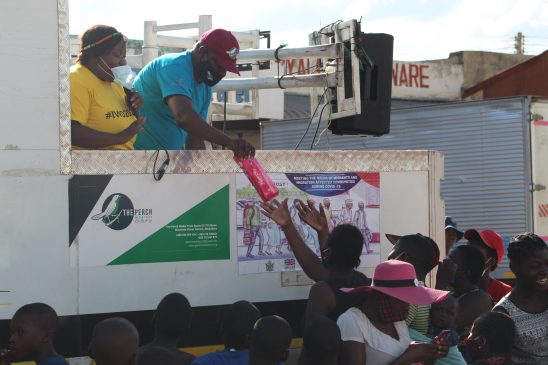
By Michael Gwarisa Renowned poet and musician Albert Nyathi and Songstress, Adiona Chidzonga, have been re-appointed brand ambassadors for the Zimbabwe National Family Planning Council (ZNFPC), in a move that is set to boost the uptake of Family planning services in Zimbabwe. Nyathi and Adiona’s contracts will run for one year with the possibility of renewal. Adiona’s role as ZNFPC brand ambassador commenced in 2018 and the council has been renewing it over years. Nyathi’s role involves being a Male Motivator, whose sole mandate is to raise awareness on Family…
Read MoreCategory: REPRODUCTIVE
MOZAMBIQUE: MSF expands access to safe abortion care in Beira
By Health Reporter Tuesday, January 23, 2024 — In Beira, a city on Mozambique’s central coast, Doctors Without Borders/MSF is connecting hard-to-reach communities with safe abortion care and other sexual and reproductive health services. Mozambique has one of Africa’s most liberal abortion laws, allowing abortion on request during the first 12 weeks of pregnancy and up to 24 weeks in limited circumstances, including fetal abnormality. Though abortion has been legal since 2014, many people still face obstacles to accessing this care, including stigma, misinformation, and corruption, such as charging for…
Read More‘I Was All Alone’: Why Some Zimbabwean Women Kill Their Babies
By Linda Mujuru, Global Press Journal Zimbabwe This story was originally published by Global Press Journal. HARARE, ZIMBABWE — “I just want to forget about it,” Tariro says. The 24-year-old woman remembers the night in January this year when she gave birth to twins, then buried them alive in a shallow grave behind a neighbour’s house. The memory lingers in her mind, though she deeply longs to erase it. “I had stomach cramps the whole night until I gave birth to twins, a boy and a girl. I was all…
Read MoreHope on the Horizon for Zimbabwe as health Ministry Signs Comprehensive abortion Care Guidelines
By Edinah Masiyiwa The Acting Chief Director for Public Health, Dr W Nyamayaro, has signed off on the National Comprehensive Abortion Care (CA) Guidelines for Zimbabwe after more than a year waiting period. These guidelines follow the World Health Organisation’s Post Abortion Care Guidelines of 2022. These guidelines will go a long way in saving many women and girls’ lives in Zimbabwe through comprehensive abortion care. The CAC guidelines articulate the burden of unsafe abortion on the health delivery system as they highlight that each year, 4.7–13.2% of maternal deaths…
Read MoreThe hidden cost of inaction on menstrual poverty
By Theresa Nyava-Machadu In today’s modern world, it is disheartening to think that many girls and women still face significant barriers when it comes to managing their periods. Menstrual poverty, the lack of access to adequate menstrual hygiene products and facilities, continues to plague communities across Zimbabwe. This silent crisis not only affects the physical and mental well-being of women but also hampers their educational and economic opportunities. It is high time we shed light on this issue and understand the real cost of not taking action. Menstrual poverty has…
Read MoreReducing Unsafe Abortions through Family Planning
By Dr Munyaradzi Murwira Background According to the World Health Organisation (WHO), family planning (FP) and comprehensive abortion care are part of primary health care (PHC), and the availability of these services is essential for achieving universal health coverage (UHC). However, lack of access to these services remains a big challenge across the world. Health care providers in many African countries lack the relevant skills and knowledge to provide evidence-based, person-centred and respectful services in these critical areas. Post-abortion family planning (PAFP) is the use of family planning methods immediately…
Read MoreChallenging Online Post-Abortion Stigma in Zimbabwe: Advocating for Compassion
By Memory Pamella Kadau Introduction The discourse surrounding abortion remains a contentious and divisive topic worldwide, and Zimbabwe is no exception to the complexities that surround it. Recognising that the decision to undergo an abortion is deeply personal and multifaceted, individuals navigate this choice for various reasons. The subject is often marred by misinformation, disinformation, and pervasive stigma, posing significant hurdles for those seeking safe and reproductive healthcare. The social media space in Zimbabwe has become toxic toward young girls and women who undergo abortions. This editorial delves into the…
Read MoreRole of Guidelines in Reducing Unsafe Abortions
By Dr Munyaradzi Murwira Background According to World Health Organisation (WHO), six out of 10 unintended pregnancies end up in induced abortions, with 45 percent of all abortions estimated to be unsafe globally. Thus, strengthening access to comprehensive abortion care (CAC) within the health care system is fundamental to meeting the sustainable development goals (SDGs) relating to good health and wellbeing, and gender equality. In 2022, the WHO launched the new Abortion Care Guidelines to provide guidance for provision of comprehensive abortion care services (CAC) globally. Priority aspects of the…
Read MoreThe Burden of Unsafe Abortions among Adolescent Girls
By Dr Munyaradzi Murwira Introduction Adolescents are a diverse group; their sexual and reproductive health needs and ability to meet those needs vary based on their life circumstances, including marital status and urban or rural residence. Adolescents often face a multitude of challenges in obtaining sexual and reproductive health services, including social stigma, judgmental attitudes of community, health care providers, financial constraints and lack of information. Key sexual reproductive health issues affecting youths include among others, STIs/HIV & AIDS, teenage pregnancies, unintended pregnancies, drug and substance abuse, and sexual gender…
Read MoreDiscussing the intersection of abortion and gender equality
By Memory Pamella Kadau Recently, the Prime Minister of the United Kingdom (UK), Rishi Sunak, declared that ‘women are women and men are men.’ His comments added further controversy to the ongoing debate on gender equality and the rights of transgender individuals. However, this also presents an opportunity to interrogate issues related to gender equality, particularly on abortion. After all, the ability to control one’s body has been historically denied to women, for example, the right to when and not to have a child. Abortion, the termination of a pregnancy,…
Read More