Zimbabwe Ranks Second Globally for HIV-Related Stigma, UNAIDS Report Finds
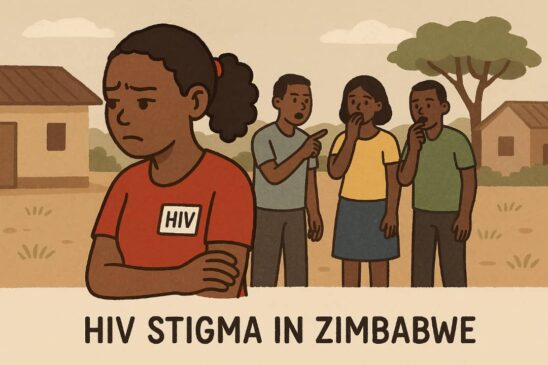
By Kuda Pembere Zimbabwe has the second highest proportion of people who experienced HIV-related stigma while seeking HIV or other health services in the past year, according to the latest UNAIDS report. Drawing from the People Living with HIV Stigma Index 2.0 (2020–2024), the UNAIDS Global AIDS Update 2025 shows that Iran tops the list with 36 percent of people living with HIV (PLHIV) reporting stigma. Zimbabwe follows with 30 percent. Sierra Leone ranks third, with 27 percent of PLHIV facing stigma, followed by Vietnam with 25 percent. In New…

Read More

Media Must Lead the Charge in Ending HIV Stigma, Says Health Minister

By Michael Gwarisa As Zimbabwe grapples with persistently high levels of stigma against people living with HIV (PLHIV), the media has been called upon to champion responsible, inclusive, and stigma-free reporting to support national HIV response efforts. Despite international targets urging countries to reduce HIV-related stigma to below 5% by 2025, Zimbabwe’s HIV Stigma Index tells a troubling story. According to the latest data, stigma currently affects nearly 70% of PLHIV and other key and vulnerable populations in Zimbabwe—an increase from 65.5% in 2014. Speaking at a media engagement breakfast…

Read More

Suspended HIV Services Resume in Masvingo as CAB-LA, Vaginal Ring Return for Key Populations

By Michael Gwarisa, recently in Masvingo For the past 12 months, Wellington*, a 41-year-old Masvingo man who has sex with men (MSM) and a male sex worker, has relied on oral Pre-Exposure Prophylaxis (PrEP) to reduce his risk of HIV infection. He has also used condoms and occasionally Post-Exposure Prophylaxis (PEP). At the start of 2025, Wellington hoped he would be initiated on the injectable form of PrEP, Cabotegravir Long-Acting (CAB-LA), to further protect himself. But like many other HIV prevention services, the injectable program had been suspended following the…

Read More

Half of UNAIDS Employees Set to Lose Jobs Amid Major Restructuring

By Michael Gwarisa UNAIDS is set to cut half of its workforce as the organization grapples with significant funding shortfalls and a shifting global donor landscape. According to internal communications, staff were informed during a town hall meeting on Tuesday that the number of employees will be reduced from around 600 to between 280 and 300. The move is part of a broader restructuring effort triggered by deep funding cuts from traditional donors, including the United States, Europe, and parts of Asia. In response, UNAIDS is considering relocating many positions…

Read More

PSH Adopts Social Enterprise Model to Sustain Health Services

By Michael Gwarisa In a strategic move to ensure long-term sustainability, Population Solutions for Health (PSH) is transforming part of its operations into income-generating ventures, positioning itself as a hybrid social enterprise amid waning international donor support. The shift comes at a time when global health programs are facing disruptions due to the withdrawal of funding from major donors, particularly the United States government. The cutbacks have forced several non-governmental organisations (NGOs) that were heavily reliant on donor aid to shut down or scale back significantly. To remain operational and…

Read More

Over 83,000 Pregnant Women in Zimbabwe Miss ANC Booking, Threatening PMTCT Goals

By Michael Gwarisa Zimbabwe’s goal to eliminate mother-to-child transmission (MTCT) of HIV, syphilis, and hepatitis B virus by 2026 could be in jeopardy as a significant number of pregnant women are still not registering for antenatal care (ANC). Recent data reveals that the country recorded 522,786 pregnancies last year. However, 16% of these women, approximately 83,000, did not register for ANC services, which include HIV testing, antiretroviral therapy (ART) initiation, and counseling. The country adopted the Triple Elimination Roadmap for the prevention of MTCT of HIV, syphilis, and hepatitis B…

Read More

Two more people with HIV may be cured after stem cell transplants

Two more people appear to be free of HIV after stem cell transplants for cancer treatment, according to a pair of posters presented at the Conference on Retroviruses and Opportunistic Infections (CROI 2025) this week in San Francisco. If the men remain in remission, they will be the eighth and ninth cases of a functional cure after the procedure. The first man, dubbed the ‘Chicago patient’, experienced viral rebound after an initial antiretroviral treatment interruption but remains in remission 10 months after stopping antiretrovirals a second time. The second man, the ‘Oslo…

Read More

UNAIDS Estimates 6.3M AIDS-Related Deaths, 8.7M New Infections from 2025-2029 Amid U.S. Aid Freeze

By Michael Gwarisa Estimates from the Joint United Nations Programme on HIV/AIDS (UNAIDS) warn of a surge in HIV infections and AIDS-related deaths over the next four years if the U.S. President’s Emergency Plan for AIDS Relief (PEPFAR) permanently shuts down. The forecast follows the partial suspension of PEPFAR projects and the closure of USAID-funded HIV and AIDS programs worldwide. Responding to a question during a virtual meeting, Mary Mahy, UNAIDS Director of Data for Impact, confirmed that an additional 6.3 million AIDS-related deaths could occur over the next four…

Read More

South Africa, Zimbabwe and Congo among countries already witnessing disruptions in HIV care, says MSF

By Staff Reporter  The decision by the US government to temporarily freeze funding to the President’s Emergency Plan for AIDS Relief (PEPFAR) alongside all other foreign aid for at least 90 days has had immediate effects on people living with HIV (PLHIV), said Doctors Without Borders (MSF) grams can continue at least until April, we are concerned that critical elements of the PEPFAR program remain frozen. More than three weeks since the US government froze PEPFAR funding, there is still widespread confusion and uncertainty as to whether this critical lifeline…

Read More

Fund your own healthcare US Embassy tells Zimbabwe

By Staff Reporter The U.S. Embassy in Zimbabwe has urged the Zimbabwean government to take responsibility for its citizens’ healthcare. On Tuesday, the Trump administration issued a waiver allowing the continuation of antiretroviral therapy (ART) and other medical services under the President’s Emergency Plan for AIDS Relief (PEPFAR). However, according to the U.S. Embassy, other programs remain on hold. With the specifics of the waiver unclear, Zimbabweans fear it could undermine progress in the fight against HIV, including the country’s achievement of the 95-95-95 targets. The U.S. Embassy stated that…

Read More