Monkeypox Disease Gets New Name, It’s Now Called “Mpox”

Following a series of consultations with global experts, WHO will begin using a new preferred term “mpox” as a synonym for monkeypox. Both names will be used simultaneously for one year while “monkeypox” is phased out. By Own Correspondent When the outbreak of monkeypox expanded earlier this year, racist and stigmatizing language online, in other settings and in some communities was observed and reported to WHO. In several meetings, public and private, a number of individuals and countries raised concerns and asked WHO to propose a way forward to change…

Read More

Nearly 40 million children are dangerously susceptible to growing measles threat

Measles vaccination coverage has steadily declined since the beginning of the COVID-19 pandemic. In 2021, a record high of nearly 40 million children missed a measles vaccine dose: 25 million children missed their first dose and an additional 14.7 million children missed their second dose, a joint publication by the World Health Organization (WHO) and the United States Centers for Disease Control and Prevention (CDC) reports. This decline is a significant setback in global progress towards achieving and maintaining measles elimination and leaves millions of children susceptible to infection. In…

Read More

Sub-Saharan Africa Has Highest AMR related Deaths-Dr Moeti

WORLD Health Organisation (WHO) WHO Regional Director for Africa, Dr Matshidiso Moeti says African governments should step-up the fight against Anti-Microbial Resistance (AMR) as the continent has one of highest AMR associated mortality in the world. By Michael Gwarisa In her World Antimicrobial Awareness Week 2022 Messag, Dr Moeti said there was also concerns over high rates of spread of AMR development and spread. Compared to other regions, sub-Saharan Africa has the highest AMR-associated death rates, at 99 deaths per 100 0001 population, far exceeding previous global projections of 700…

Read More

Merck to Initiate New Phase 3 Clinical Program with Lower Dose of Daily Oral Islatravir in Combination with Doravirine for Treatment of People with HIV-1 Infection

RAHWAY, N.J.–(BUSINESS WIRE)-– Merck (NYSE: MRK), known as MSD outside of the United States and Canada, announced today that the company will initiate a new Phase 3 clinical program with once-daily islatravir for the treatment of people with HIV-1 infection. These new Phase 3 studies will evaluate a once-daily oral combination of doravirine 100 mg and a lower dose of islatravir (DOR/ISL). One study will evaluate DOR/ISL in previously untreated adults with HIV-1 infection and two studies will evaluate DOR/ISL as a switch in antiretroviral therapy (ART) in adults with…

Read More

Half of health care facilities globally lack basic hygiene services – WHO, UNICEF

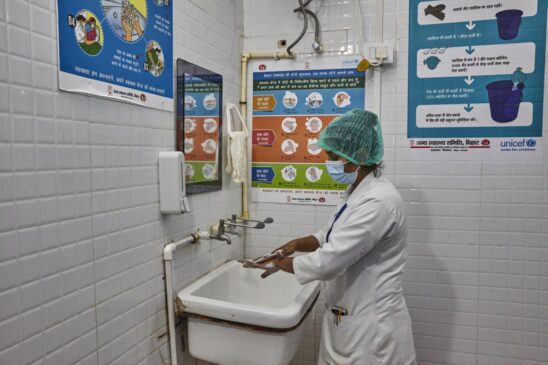
Newly established global estimate on hygiene reveals the risk of disease spread and infections to patients and health care providers Half of health care facilities worldwide lack basic hygiene services with water and soap or alcohol-based hand rub where patients receive care and at toilets in these facilities, according to the latest Joint Monitoring Programme (JMP) report by WHO and UNICEF. Around 3.85 billion people use these facilities, putting them at greater risk of infection, including 688 million people who receive care at facilities with no hygiene services at all.…

Read More

China Considers Offering Attractive Incentives For Families To Have More Children As Birth Drops

A total of 17 Chinese government departments on Tuesday jointly released a guideline on support policies in finance, tax, housing, employment, education and other fields to create a fertility-friendly society and encourage families to have more children, as the country faces growing pressure from falling birth rates. Analysts said that it is rare to see so many ministries and departments jointly release such a detailed and comprehensive guideline on encouraging fertility and supporting childbearing, underscoring the seriousness of the growth rate of China’s population, which has slowed significantly, with a…

Read More

Experts Rename African Linked Monkeypox Variants To End Stereotypes

A group of global experts convened by WHO has agreed on new names for monkeypox virus variants, as part of ongoing efforts to align the names of the monkeypox disease, virus and variants—or clades—with current best practices. The experts agreed to name the clades using Roman numerals. By Staff Reporter The monkeypox virus was named upon first discovery in 1958, before current best practices in naming diseases and viruses were adopted. Similarly for the name of the disease it causes. Major variants were identified by the geographic regions where they…

Read More

World Population To Hit 8 Billion Mark In November 2022

The United Nations announced that the world’s population is expected to reach 8 billion on 15 November 2022  – a milestone for humanity – and in 2023 India is projected to become the most populous country, surpassing China. But perhaps the even bigger headline is that fertility rates are at a historic low: Two thirds of people are now living in a country or area with a lifetime fertility below the replacement rate of 2.1 births per woman. By Own Correspondent These new data arrive at a time of dizzying…

Read More

25 Million Infants Missing Out On Lifesaving Vaccines

THE World Health Organisation (WHO) and UNICEF have sounded the alarm as new data shows global vaccination coverage continued to decline in 2021, with 25 million infants missing out on lifesaving vaccines The largest sustained decline in childhood vaccinations in approximately 30 years has been recorded in official data published today by WHO and UNICEF. The percentage of children who received three doses of the vaccine against diphtheria, tetanus and pertussis (DTP3) – a marker for immunization coverage within and across countries – fell 5 percentage points between 2019 and…

Read More

WHO’s Science Council launches report calling for equitable expansion of genomics

WHO’s Science Council of experts has issued its first report, on accelerating access to genomics for global health. The report argues that it is not justifiable ethically or scientifically for less-resourced countries to gain access to such technologies long after rich countries do. The field of genomics uses methods from biochemistry, genetics, and molecular biology to understand and use biological information in DNA and RNA, with benefits for medicine and public health – especially during the COVID-19 pandemic – as well as agriculture, biological research and more. The report calls…

Read More