By Gamuchirai Masiyiwa, GPJ Zimbabwe HARARE, ZIMBABWE — When Tanya moved to Ireland for care work in 2022, she was certain of three things: Her family would join her soon. Her husband would find work. And her children would attend a good school. Initially, her move was smooth. Visas and permits were no problem. But once in Ireland, reality proved harsh for Tanya, a Zimbabwean who asked Global Press Journal to use her middle name for fear of jeopardizing her visa status. The country’s visa restrictions for the general employment…
Read MoreCategory: Features
From NAC Media Tour to University: How a HealthTimes Article Opened University Doors for Karoi Girl
By Michael Gwarisa Sometimes, all it takes for a destiny helper to find you is being at the right place at the right time. For Cecilia Mhande (20), from Karoi in Mashonaland West Province, it took her willingness to share her story as a beneficiary of the Sista2Sista program with journalists during the 2024 National AIDS Council (NAC) Editors Media Tour. In 2023, when the Advanced Level (A Level) results were announced, Cecilia was overjoyed to discover she had passed with 11 points. However, her happiness was short-lived, as the…
Read MoreDiseases Linked to Wearing Second-Hand Clothes (Mabhero)
By Michael Gwarisa In Zimbabwe, second-hand clothes, locally known as mabhero, have become a popular choice for many due to several reasons. For some, it’s the affordability compared to buying brand-new garments. For others, it’s the allure of vintage fashion, pre-worn items that carry a unique, weathered charm. Major second-hand clothing hubs in Zimbabwe include Sakubva Market in Mutare, as well as Mupedzanhamo and Avondale Markets in Harare. These markets are so popular that even undergarments, such as high-end brands like Victoria’s Secret, are highly sought after by shoppers, especially…
Read MoreCritical Gaps in Vital Monitoring Threaten Care Outcomes In Those Ageing With HIV In Zimbabwe
By Michael Gwarisa For 21 years, Martha Tholanah (60) has lived with HIV. She has experienced it all, from the days when an HIV diagnosis was a death sentence to today, when people living with HIV can lead healthy, fulfilling lives. Testing positive on January 3, 2003, Martha recalls her heartbreak when health workers informed her that her CD4 count was below 200. I had fallen sick and had to get tested. I had also just been accepted for a new job, so I needed to know where I stood.…
Read MoreMeet Dr. Dhodho: The Once Sickly Village Boy Who Transformed Rural Zimbabwe’s HIV Response
By Michael Gwarisa He wears many hats. Dr. Efison Dhodho is currently the Knowledge Manager for the Zimbabwe College of Public Health Physicians, a dedicated researcher, and the Director for Strategic Information, Evaluation, Learning, and Information Technology Systems at the Organization for Public Health Interventions and Development (OPHID). Born into a family of 13 as the fifth child, Dr. Dhodho recalls how his fragile health as a child necessitated moving to live with his mother, a rural nurse in Mwenezi District, while his siblings stayed with their father, a teacher.…
Read MoreGlendale’s Failing Sewer and Water Systems Spark Deadly Cholera Outbreak
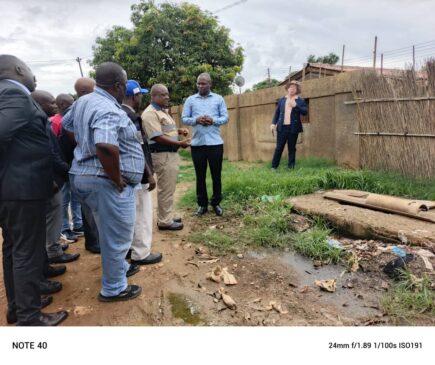
By Michael Gwarisa In Glendale, mornings are no longer a time of fresh beginnings. Instead, residents wake to an unbearable reality, human excreta strewn across their doorsteps. Burst sewer pipes, left unrepaired for months, spew waste into the streets, forcing entire neighborhoods to navigate pools of sludge. The stench of decaying matter clings stubbornly to the air, invading homes and harassing nostrils with every breath. Among those most affected is the Nyirongo family residing in the Highway section of Glendale, whose ordeal serves as a chilling reminder of the public…
Read More2024 Top 15 Outstanding Health Champions in Zimbabwe
As the year concludes, and as has become our custom, we recognize individuals and organizations whose efforts have advanced access to healthcare in Zimbabwe. Despite challenges such as the exodus of skilled healthcare workers due to poor working conditions, the country’s healthcare sector is still in safe and capable hands of the remaining foot soldiers at the front-line of Zimbabwe’s healthcare. Amid these difficulties, heroes have emerged, tirelessly working to ensure access to quality healthcare services. In 2024, we honor medical professionals, nurses, civil society leaders, and development partners whose…
Read MoreInformation Gaps Drive Unintended Pregnancies Among Children Who Live On The Streets In Zimbabwe
By Kuda Pembere City life knows no sleep particularly for children living and working on the streets of the Harare Central Business District (CBD). Access to sexual reproductive health services is usually a hurdle for children due to a number of reasons. Around 11 pm, only a handful of people can be seen milling around town. However, it is easy to spot children who live and work on the streets owing to their rugged and torn apparel. To prepare and recoup for the long nights which in most cases are…
Read MoreAlcon Celebrates One Year of Advancing Eye Care Through its Phaco Development Program in Africa
By Michael Gwarisa Alcon, the global leader in eye care dedicated to helping people see brilliantly, today commemorated the first anniversary of its African Phaco Development Program (PD). This milestone reflects the program’s significant achievements across South Africa, Kenya, and Zambia, with plans for further regional expansion. Alcon remains committed to the principle of “Skill Africa, by Africa, for Africa,” as it continues to enhance healthcare capacity and improve access to eye care across the continent. According to the World Health Organization1, over 110 million people in Africa suffer from…
Read MoreARASA Empowers ZCLDN to Advance Zimbabwe’s Civil Liberties and Drive Policy Change on Drug Use
In Zimbabwe, the burden of drug and substance abuse has grown significantly over the years. This crisis was further compounded by the COVID-19 pandemic, which, through global lockdowns, exposed many young people to negative coping mechanisms as they struggled with the idleness and isolation brought about by restrictions. According to official data, over 75% of mental health hospitalizations in Zimbabwe are linked to drug and substance use. Psychiatric facilities across the country are often overwhelmed, operating at full capacity as they attempt to accommodate the rising number of drug-related admissions.…
Read More