By Staff Reporter A landmark study in Zimbabwe and Zambia has uncovered alarming pregnancy rates among adolescents living with HIV since birth, exposing urgent gaps in healthcare and social support systems. The research, conducted with 842 adolescents aged 11-19, found that pregnancy incidence reached 6.8 per 100 person-years among those aged 15 and older – a rate significantly higher than regional averages. The findings paint a concerning picture of intersecting challenges. While 92% of babies born to these young mothers tested HIV-negative thanks to effective prevention programs, only 19% of…
Read MoreCategory: Health News
One Visit, One Test, Three Results: The Triple Elimination Test Steps Up Global MTCT Fight
By Shamiso Yikoniko in Kigali, Rwanda A groundbreaking diagnostic tool recently prequalified by the World Health Organization (WHO) is set to revolutionize efforts to eliminate mother-to-child transmission (MTCT) of three major infections: HIV, syphilis, and hepatitis B. Dubbed the “Triple Elimination Test,” the innovative tool adopts a ‘one visit, one test, three results’ approach, allowing healthcare providers to screen for all three infections using just one blood sample — with results available within 20 to 30 minutes. Previously, expectant mothers in many low-resource settings had to return to clinics multiple…
Read MoreZimbabwe to Implement New WHO HIV Guidelines
By Shamiso Yikoniko in Kigali, Rwanda The World Health Organization (WHO) has released updated HIV prevention, treatment, and care guidelines during the 13th International AIDS Society (IAS) Conference on HIV Science in Kigali, Rwanda, offering renewed hope in the global fight against HIV. Zimbabwe, home to an estimated 1.3 million people living with HIV, is expected to benefit from these new tools to bolster its already robust response to the epidemic. The revised guidelines introduce key innovations designed to simplify care, expand prevention options, and improve patient outcomes. Among the…
Read MoreManicaland State University Triumphs in SAYWHAT’s National Varsity Debate Showdown
By Kuda Pembere in Nyazura Once overlooked as underdogs, Manicaland State University of Applied Sciences (MSUAS) pulled off a surprise victory at this year’s SAYWHAT Speak and Solve Initiative (SASI) Debate Tournament, outshining former champions the University of Zimbabwe (UZ), Midlands State University (MSU), and Great Zimbabwe University (GZU). Just last year, MSUAS was eliminated in the early stages of the competition. This year, they led the scoreboard, followed by UZ as first runners’ up. GZU came in third, and MSU in fourth place. Speaking after the tournament, MSUAS debater…
Read MoreChildren in Sudan face growing danger as cholera spreads amid funding cuts, World Vision warns
By Staff Reporter As Sudan battles a deadly and rapidly spreading cholera outbreak, millions of children are at grave risk. More than 700 people have died, including children, and 32,000 suspected cases have been recorded since January 2025. The outbreak now affects 17 of the country’s 18 states, compounding the suffering of families already devastated by conflict, forced displacements, and a collapsing health system. Among the most vulnerable are 3.2 million malnourished children under the age of five, whose weakened immune systems leave them susceptible to cholera and other waterborne diseases. The…
Read MoreExperts Outline Overlooked Daily Habits That Support Hormonal Health in Aging Men
Experts at Ben’s Natural Health say there are natural ways to help your body fight back – small daily habits that don’t cost much but can add up to real results over time. A 2-Minute Cold Shower First Thing – Not at Night Cold showers aren’t just a wake-up shock – when done at the right time, they may help keep men’s hormones in check. “Start with just two to three minutes of cold water within half an hour of waking up,” says a men’s health advisor at Ben’s Natural Health. This timing helps your body…
Read MoreU.S. Senate Moves to Protect PEPFAR Funding Amid Trump-Era Cuts Threat
By Health Times Correspondent The International AIDS Society (IAS) has applauded a bipartisan effort in the U.S. Senate to safeguard the U.S. President’s Emergency Plan for AIDS Relief (PEPFAR) from a proposed $400 million funding cut that had originated from President Donald Trump’s rescission package. However, advocates caution that the battle is far from over. Both the Senate and House of Representatives must still vote on the final budget package, and last-minute changes could emerge before the statutory deadline. PEPFAR, launched in 2003 by President George W. Bush, is widely…
Read MoreGlobal Leaders Come Together at IAS 2025 in Kigali
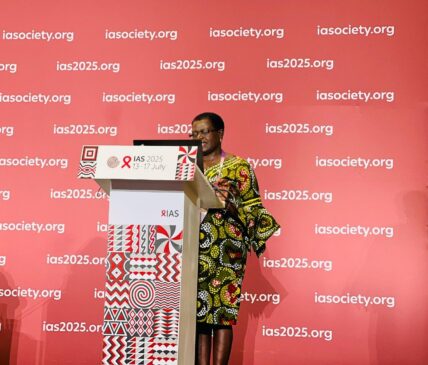
By Health Times Reporter in Kigali, Rwanda The 13th International AIDS Society (IAS) 2025 conference opened today in Kigali with a powerful call to action: ‘Communities must lead the fight to end HIV’. Over 5,000 scientists, activists, and policymakers gathered to celebrate scientific progress while demanding urgent investment in grassroots solutions. Rosemary Mburu, a seasoned HIV advocate, set an inspiring tone with her speech. “Before the global partnerships and wonder drugs, it was communities, armed with love and courage, who faced the darkness of the epidemic,” she stated. Emphasizing the vital role of…
Read MoreZimbabwe’s HIV Self-Testing Initiative Makes Up 15% of New Diagnoses
By Shamiso Yikoniko in Kigali, Rwanda Zimbabwe’s proactive efforts to expand HIV self-testing (HIVST) have led to 15 percent of all new HIV diagnoses in the country this year (2024), according to recent government data shared at the 13th International AIDS Society (IAS) Conference in Kigali, Rwanda. The findings highlight the strategy’s success in reaching high-risk groups, especially men, who have historically been more difficult to diagnose through traditional health services. The strategy has resulted in male testing rates doubling with HIVST (39 percent) compared to facility-based testing (22 percent);…
Read MoreGlobal Polio Eradication Efforts Face New Challenge with Vaccine-Derived Poliovirus
By Michael Gwarisa Even though the world has made remarkable progress in the fight against polio, with wild poliovirus now circulating in only two countries, Afghanistan and Pakistan, a new challenge has emerged: vaccine-derived poliovirus (VDPV), which is causing outbreaks in previously polio-free regions. The development underscores the urgent need for robust immunization programmes and global cooperation to achieve the goal of complete polio eradication by 2023, as outlined in the Immunization Agenda 2030 (IA2030). The Polio Eradication Journey Polio, a debilitating and potentially fatal disease, has been targeted for…
Read More