Goromonzi Community Welcomes Life-Saving Maternity Waiting Home

By Kuda Pembere in Goromonzi A new maternity waiting home at Masikandoro Clinic in Goromonzi District is being hailed a timely and life-saving development, providing expectant mothers with a safe place to stay as they await delivery—especially in a community grappling with maternal and neonatal mortality, poor road infrastructure, and long travel distances to health facilities. Located in Ward 1 of Goromonzi West Constituency, the waiting home was constructed over a period of three months. It was built under the project titled:“Supporting Peaceful, Safe, and Sustainable Reintegration for Returning Migrants…

Read More

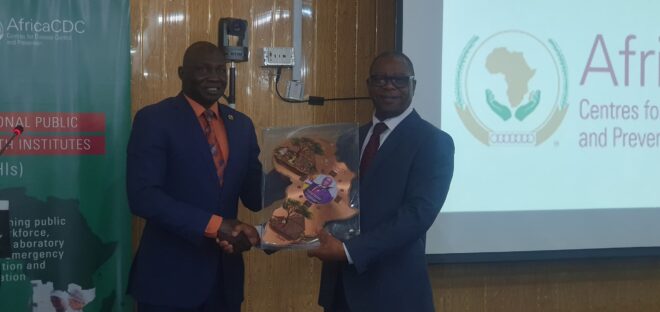
Zimbabwe Hosts High-Level Regional Meeting to Advance National Public Health Institutes Across Southern Africa

By Michael Gwarisa Zimbabwe has opened its doors to public health leaders from across Southern Africa this week, hosting the fourth edition of the Regional National Public Health Institutes (NPHI) Indaba. The three-day meeting, which began on June 25 in Harare, convenes African Union (AU) Member States, global health partners, and technical institutions to evaluate progress and reinforce the commitment toward building and strengthening National Public Health Institutes across the continent. Organised by the Africa Centres for Disease Control and Prevention (Africa CDC), the gathering seeks to address persistent gaps…

Read More

Marriage Isn’t Working’: Divorce Among Zimbabwean Women Up by Nearly 100,000 in 10 Years

By Michael Gwarisa  The number of divorced or separated women in Zimbabwe has surged dramatically over the past decade, rising by nearly 100,000 since 2015. This is according to new findings from the 2025 Zimbabwe Demographic and Health Survey (ZDHS), conducted by the Zimbabwe National Statistics Agency (ZIMSTAT) in partnership with the Ministry of Health and Child Care (MoHCC) and development partners. According to the 2025 report, 12% of women aged 15–49 are now divorced or separated, compared to 9% in 2015. Given Zimbabwe’s current estimated population of 16 million—with…

Read More

Suspended HIV Services Resume in Masvingo as CAB-LA, Vaginal Ring Return for Key Populations

By Michael Gwarisa, recently in Masvingo For the past 12 months, Wellington*, a 41-year-old Masvingo man who has sex with men (MSM) and a male sex worker, has relied on oral Pre-Exposure Prophylaxis (PrEP) to reduce his risk of HIV infection. He has also used condoms and occasionally Post-Exposure Prophylaxis (PEP). At the start of 2025, Wellington hoped he would be initiated on the injectable form of PrEP, Cabotegravir Long-Acting (CAB-LA), to further protect himself. But like many other HIV prevention services, the injectable program had been suspended following the…

Read More

Broken Clinics, Broken Promises: The Cost of Delayed Devolution

By Kuda Pembere In Zimbabwe, the issue of healthcare spending remains a thorny one. While much of the attention tends to focus on the Ministry of Health and Child Care, a closer look reveals that local authorities—both urban and rural—are grappling with the immense responsibility of providing basic healthcare services, often without the necessary resources. For years, these local governments have operated municipal clinics and hospitals, working to support national efforts toward achieving Universal Health Coverage. Yet, the journey toward that goal has been hampered by limited and inconsistent financial…

Read More

Every new baby in the UK to receive DNA testing

Every baby in the UK will have their DNA tested under a new 10-year plan for the NHS. The whole-genome sequencing will screen for hundreds of diseases and allow people to “leapfrog” killer illnesses, according to the Health Secretary, Wes Streeting. Speaking to the Telegraph, he revealed plans to move the NHS towards a model of sickness prevention rather than treatment. Personalised medicine, made possible through things like DNA testing, will form a big part of that plan, with £650m pledged to genomics research by the government. “The revolution in medical science…

Read More

Five Things Every Woman Should Know About Menopause

By Karen Bester Being a woman isn’t always easy. From a young age, we’re told half-truths and vague warnings about the changes our bodies will face. From periods to pregnancy and eventually menopause. In South Africa in particular, many women still don’t receive the right education about this important and inevitable phase of life, according to a 2024 Global Public Health study. With so much complexity in our female biology, it’s no surprise many of us feel unprepared when it comes to ‘the change,’ says Karen Bester, Medical Training Manager…

Read More

FDA approves twice-a-year injection for HIV prevention

CNN — A drug currently used to treat certain HIV infections has also, on Wednesday, received approval from the US Food and Drug Administration to be used to prevent HIV. Gilead Sciences, maker of the drug, announced that a twice-a-year injection of lenacapavir has been approved in the United States for HIV prevention under the brand name Yeztugo. In clinical trials, the drug was found to dramatically reduce the risk of infection and provide near-total protection against HIV, significantly more than the primary options available for pre-exposure prophylaxis or PrEP. Therapies called PrEP…

Read More

Avenues Clinic Rallies Youth Toward STEM, Breaking Perceived Limitations

By Michael Gwarisa In an era fraught with job uncertainty, driven by advances in artificial intelligence and a contracting employment market, the Avenues Clinic in Harare recently took an inspiring step to empower its young men. On June 14, more than 100 male students from Harare High School, Allan Wilson, Mufakose High School, and others attended a dynamic careers exhibition hosted by the clinic. The event celebrated Father’s Day and Men’s Mental Health Month, offering teens insights into science and business pathways they might not have considered before. Located in…

Read More

Africa’s Healthcare Gets Boost as Merck Foundation-Trained Doctors Fill Specialist Gap

By Kuda Pembere Following training in critical specialties through scholarships awarded by the Merck Foundation, African doctors are now seeing around 1,000 patients each month, significantly reducing the disease burden in their communities. Previously, many of these patients had nowhere to go for specialized care. Speaking at the Merck Foundation First Lades Initiative in Dubai, Merck Foundation Chief Executive Dr. Rasha Kelej said the training programs have played a transformative role in Africa’s health sector. “We have provided scholarships to doctors from 52 countries—primarily in Africa and some in Asia—covering…

Read More