NDS1 blueprint falls on the collaboration between private sector and Gvt 

 By Staff Reporter Cimas Health Group Chief Executive Officer Vulindlela Lester Ndlovu has said the success of the government’s National Development Strategy 1 (NDS1) blueprint falls squarely on the private sector working together with the government.  Mr Ndlovu made the remarks on Wednesday addressing guests at the International Business Conference 2024 which is part of the weeklong Zimbabwe International Trade   in Bulawayo.  For the second year running, Cimas Health Group is the platinum sponsor for the ZITF International Business Conference. Our wish list for our industry, consistent with this year’s…

Read More

Climate change and antimicrobial resistance reversing progress in malaria fight: CWGH

By Kuda Pembere The Community Working Group on Health (CWGH) joining the world in commemorating World Malaria Day has noted with concern how climate change is reversing the gains in controlling malaria cases in Sub-Saharan Africa where children and pregnant women are becoming the most affected. With Zimbabwe being a Sub-Saharan country, malaria killed 29 people from the 15 400 cases that were recorded. Having the highest number of cases in Zimbabwe was Mashonaland Central with 7 561 cases followed by Manicaland with 3 325, and Mashonaland East 1 885…

Read More

Government of Zimbabwe, UNFPA and partners call for greater investment to accelerate progress on the population and development agenda

By Health Reporter At a High Level Meeting to track progress on implementation of the International Conference on Population and Development Programme of Action (ICPD PoA), and in light of findings from a global report, the Government of Zimbabwe, the United Nations Population Fund (UNFPA) and partners today called for greater investment to accelerate progress on the population and development agenda. The year 2024 is a milestone year for the global community as it marks the 30th anniversary of the ICPD. The ICPD conference, held in Cairo in September 1994,…

Read More

NCDs In African Children Put On The Spotlight As Inaugural ICPPA Conference Kicks Off In Tanzania

By Michael Gwarisa in Dar Es Salaam, Tanzania The First International Conference on the PEN-Plus Regional Strategy to Address Severe Non-Communicable Diseases (NCDs) in Africa (ICPPA), has commenced in Tanzania, amidst calls for increased investment towards prevention, research and care for childhood NCDs. The four-day confrence is running from April 23 to  April 25 2024, under the theme, “Prioritising Person-Centered Approach to Chronic and Severe NCDs-Type 1 Diabetes, Sickle Cell Diseases, and Childhood Heart Diseases.” The conference is being hosted by the  Tanzania Ministry of Health in Tanzania and the…

Read More

UNFPA chips into Zim’s cholera fight

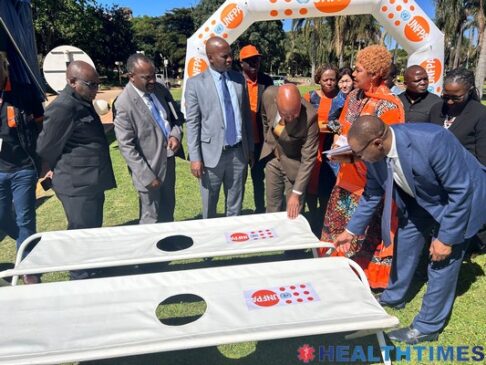
By Kuda Pembere The United Nations Population Fund (UNFPA) donated cholera equipment and sundries worth over US$200 000 in support of the Zimbabwean Government’s fight against the disease. Donated were  equipment and supplies worth US$ 225 000 which included 30 tents, 150 cholera beds, 516 dignity/hygiene kits, 520 maternity kits and 3000 packets of aquatabs. The Health and Child Care Minister Dr Douglas Mombeshora lauded UNFPA for the donation noting it came at the nick of time when the country had recorded over 600 deaths and 32 000 cases. “The…

Read More

Challenges hamper cervical cancer fight in Zim

By Kudakwashe Pembere A plethora of challenges within the public health sector are stalling Zimbabwe’s progress in the elimination of cervical cancer which despite commendably rolling out some programs, the country is ranked fourth regionally and globally in terms of the disease burden. The battle against cervical cancer in Zimbabwe is far from being won until these challenges bedeviling the public health delivery system are resolved. Amongst the challenges mentioned are the malfunctioning radiotherapy machines, shortage of cervical cancer specialists and staff as well as laboratory equipment and pathologists. This…

Read More

Zimbabwe’s TB Financing Timebomb: 95% Of Zimbabwe’s TB Financing Comes from Donors

By Michael Gwarisa Tuberculosis (TB) is by far one of the world’s most ancient diseases, dating back to about 9000 years ago when TB was first detected in humans in Atlit Yam, a city now under the Mediterranean Sea, off the coast of Israel. History has it that Archaeologists found TB in the remains of a mother and child buried together. Despite being a disease from medieval times, Tuberculosis is one of the world’s second-leading infectious killers after COVID-19 (above HIV and AIDS). According to the World Health Organisation (WHO)…

Read More

New CIMAS Gene Sequencing Technology To Revolutionize Early Detection Of Cancer and Lifestyle Diseases In Zimbabwe

By Michael Gwarisa In a bid to improve detection and treatment of Non-Communicable Diseases (NCDs) and other lifestyle diseases in Zimbabwe, CIMAS Medical Aid Society has procured a Genetic Sequencing device that is set to be a game changer in Zimbabwe’s public health system. The Gene Sequencer is a fairly new technology in Zimbabwe, with CIMAS’s laboratory division MEDLABS, being one of the few organisations in possession of the technology in the country. The technology screens for underlying health issues and disease susceptibility in different populations.   Speaking in an…

Read More

Africa CDC Slams Mordena For Halting African Vaccine Plant

Africa CDC notes with disappointment that Moderna has put its plans to establish vaccine manufacturing in Kenya on hold. While we acknowledge that the need and demand for COVID-19 vaccines has indeed decreased significantly, both in Africa and globally, it is important that we reflect on the nuances of this. The Africa CDC recalls the considerable efforts of Africa to timely access vaccines as Member States of the Union considered vaccines as the most effective means in the pandemic response. Through its Heads of States and Government, the AU and…

Read More

Health Ministry moots new nurse training recruitment policy

By Kuda Pembere The new nursing training recruitment policy among other issues address the issue of recruitment modalities following the abandonment of e-recuitment, HealthTimes has learned. Zimbabwe abandoned the centralized online application system for nurses after the online approach had drawn harsh criticism from the public for preventing eligible local candidates from being hired by training institutes in their areas. The decision to change the procedure was made in response to an investigation that exposed a troubling pattern: a disproportionate number of trainee nurses were being hired from places that…

Read More