By Kuda Pembere Water, Sanitation, and Hygiene (WASH) programmes need to be strengthened in maternal and child health as well as sexual reproductive health alongside general patient care for improved infection prevention and control (IPC) in healthcare facilities to reduce healthcare associated infections, Harare Provincial Medical Director Dr Innocent Hove said Friday. He said this while officiating the International hand hygiene day commemorations held at Sally Mugabe Central Hospital. “Programme areas such as WASH in Maternal and Child Health, Sexual Reproductive Health and general patient care areas require strengthening to…
Read MoreCategory: Health News
Improved Combination HIV Prevention Coverage Reduces New Infections In girls and young women in Zimbabwe
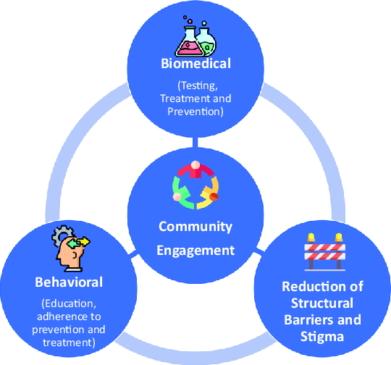
By Staff Reporter Zimbabwe is among nine high-prevalence locations in Sub-Saharan Africa to record a reduction in new HIV infections between 2010 and 2022 owing to increased coverage of combination prevention methods according to findings from a 2023 Global HIV Prevention report UNAIDS defines combination HIV prevention as rights-, evidence-, and community-based programs that promote a combination of biomedical, behavioural, and structural interventions designed to meet the HIV prevention needs of specific people and communities. Its goal is to reduce the number of new infections through activities with a greater…
Read MoreCommunity Posts model makes significant strides in improving HIV outcomes
By Shamiso Yikoniko In the ongoing battle against HIV, an innovative model promises to bring renewed hope and transform the lives of men, children, and adolescents who are missing from critical HIV prevention, care, and treatment services. The groundbreaking initiative – Community Posts Model – has been gaining momentum and garnering attention for its remarkable success stories. One key aspect of the model is its comprehensive approach to locating and involving the hard-to-reach population. It utilizes a combination of community outreach, targeted awareness campaigns, and partnerships with local organizations to…
Read MoreIAS 2025 to take place in Kigali, Rwanda
2 May 2024 (Geneva, Switzerland) – IAS – the International AIDS Society – announced today that IAS 2025, the 13th IAS Conference on HIV Science, will take place in Kigali, Rwanda, from 14 to 17 July 2025. Pre-meetings will be held on 13 July. The conference will spotlight challenges and opportunities in some of the world’s most HIV-affected regions while offering insights gained from other areas of the world. IAS 2025 will serve as a critical reflection point to collectively take stock of how and in what ways the advances in HIV science can…
Read MoreOver 30 fake Parirenyatwa Hospital workers nabbed
By Staff Reporter Following the recent apprehension of three fake doctors at Parirenyatwa Group of Hospitals, the health institution has acknowledged the proliferation and subsequent nabbing of individuals posing as Hospital workers. More than 30 health personnel masquerading as employees at the central hospital have been rooted out by their security department since January 2023. The Hospital with a staff complement of around 4000 as well as having about 400 doctors of all levels, says there were criminals who pretended to be employees and nursing tutors. “Parirenyatwa Group of Hospitals…
Read MoreZimbabwe Launches Stage 2 of CATALYST Study, Adding Injectable PrEP to HIV Prevention Options for Participants
By Michael Gwarisa Following the delivery of injectable Pre-Exposure Prophylaxis (PrEP) doses, Zimbabwe through the Maximizing Options to Advance Informed Choice for HIV Prevention (MOSAIC) consortium, has launched stage 2 of the CATALYST study, introducing the newly approved injectable PrEP. The study is funded by funded by PEPFER through USAID. The CATALYST study was initially launched in 2023 where two PrEP methods — tenofovir-based oral pills and the dapivirine ring (PrEP ring) — were offered. The CATALYST sites remain the same six sites where stage 1 was conducted. These include…
Read MoreMedical Aid Industry Representative Body Optimistic About Zig Currency
By Michael Gwarisa The Association of Healthcare Funders of Zimbabwe (AHFoZ), the representative body for the medical aid industry in the country, has thrown its weight behind the newly introduced Zimbabwe Gold (Zig). The new endorsement comes in the wake of mixed reactions following the introduction of the currency, with some players in the medical aid industry raising fears around the sustainability and continuity of the Zig currency since it was launched through a Statutory Instrument (Statutory Instrument 60 of 2024), which in most cases has a shorter shelf life.…
Read MoreMCAZ to regulate In Vitro Diagnostics
By Kuda Pembere The Medicines Control Authority of Zimbabwe (MCAZ) intends to introduce regulations governing the registration and use of in vitro diagnostics (IVDs) in the country. This follows concerns and reports that there is a proliferation of substandard and counterfeit IVDs in the country. IVDs according to the World Health Organization (WHO) are tests that can detect disease, conditions and infections. In vitro simply means ‘in glass’, meaning these tests are typically conducted in test tubes and similar equipment, as opposed to in vivo tests, which are conducted in…
Read More‘Financial education, critical component in SRHR’
By Kuda Pembere Financial education is a vital element often overlooked in sexual reproductive health rights issues for total emancipation of adolescent girls and young women (AGYWs) in Zimbabwe, an Aflatoun International official said on Monday. Aflatoun is a non-profit organization offering social, financial and entrepreneurial education to young people globally. Supported by Education Above All Foundation and six other organizations in Zimbabwe, the organization has been in SRHR projects alongside other projects aimed at empowering youngsters with life skills and financial education. Aflatoun International Chief executive officer Roeland Monasch…
Read MoreCommunities A Vital Cog In Addressing Severe NCDs In Africa-Dr Benido
By Michael Gwarisa Non-communicable Diseases (NCDs), continue to exert unwarranted pressure on Africa’s healthcare system, with data from the 2022 World Health Organisation (WHO) NCDs progress monitor estimating that between 50 percent and 88 percent of deaths being recorded in seven African countries, mostly small island nations, are due to non-communicable disease. The UN Sustainable Development Goal (SDG) target 3.4 calls for all Member States to reduce premature mortality from non-communicable diseases (NCDs) by one-third in 2030 through prevention, treatment and promoting mental health and well-being. However, over the years,…
Read More