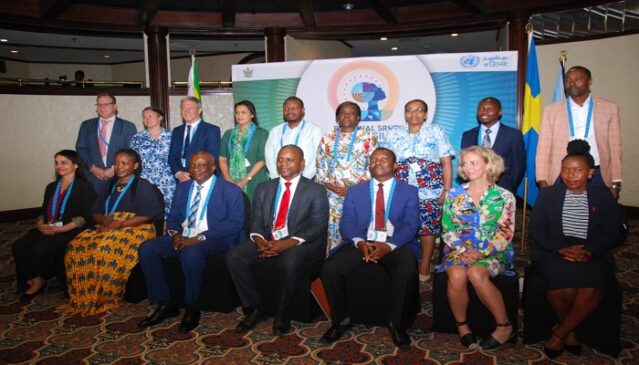
THE three day Regional Symposium on Sexual Reproductive Health and Rights (SRHR),has come to an end amidst growing calls for increased investment and creation of an enabling policy framework that allows for the smooth implementation of SRHR programs in the East and Southern African region (ESAR). By Michael Gwarisa in Victoria Falls The symposium was hosted by the Ministry of Health and Child Care and organized by UNAIDS, UNFPA, UNICEF and WHO under the banner of the Joint UN Regional 2gether 4 SRHR Programme. Over 200 delegates from across 24…
Read MoreCategory: MARTERNAL HEALTH
Unsafe Abortion – The Hidden Health Crisis
By Dr M Murwira In the early years of my medical career, it was always exciting to start a new role in the various medical specialties at a Central Hospital. As such, I was looking forward to the experience of working in the Obstetrics and Gynecology department. However, my first Gynecology department night shift was a baptism of fire. In the emergency ward, multiple sick women lying on stretcher beds and on the floor awaited me. It was a horrific experience to see both young and mature women crying, writhing…
Read MoreRegional Sexual and Reproductive Health Rights Symposium Kicks-off In Victoria Falls, Zimbabwe
OVER 20 African countries are gathered in the resort town of Victoria Falls to deliberate on issues around access to Sexual Reproductive Health and Rights (SRHR) for young people with the aim of finding a lasting solution to teenage pregnancies, gender-based violence, and HIV infections in East and Southern Africa. By Michael Gwarisa in Victoria Falls The three day regional symposium which will run up to Thursday, October 13, 2022 has been organized by the UNAIDS, UNFPA, UNICEF and WHO under the banner of the Joint UN Regional 2gether 4…
Read MoreZimbabwe Health Journalists Trained On Sensible Infertility Reporting
ZIMBABWE’S First Lady, Dr Auxillia Mnangagwa in partnership with the Merck Foundation and the Zimbabwe Union of Journalists (ZUJ), hosted a half day training to sensitise Zimbabwean Journalists on issues around fertility and infertility. By Michael Gwarisa The development comes in the midst of a growing burden in fertility related complications in both women and men in Sub-Saharan Africa largely driven by lifestyle related health conditions and Non Communicable diseases (NCDs). Giving her remarks during the training, Merck Foundation Chief Executive Officer, Dr Rasha Kelej said there were numerous risk…
Read MoreFailure To Prioritize Midwives Welfare Leads To Negative Health Outcomes
The 5th of May was the International Midwives Day. In Zimbabwe there was very little celebration as the midwives are facing numerous challenges, especially around securing living wages. One of the publications in Zimbabwe reported that midwives are wallowing in poverty while they work under very difficult conditions. Midwives in Zimbabwe are facing many challenges which affect their delivery of work. As this is not enough, on the 20th of June, health workers — midwives included — went on a strike, demanding a salary increase. By Edinah Masiyiwa The challenges…
Read MoreInvesting in midwives is crucial for sustainable development
Midwives save lives. In the last 100 years, we have seen significant advancements and achievements in the age-old profession of bringing life into the world. Yet, in the Asia and the Pacific region alone, there is a staggering shortage of 200,000 midwives. By Björn Andersson This year, as we mark the centennial anniversary of the International Confederation of Midwives, we celebrate the bravery, skills, and compassion of midwives, while calling on governments to commit to increased investments in midwifery across Asia and the Pacific to uphold sexual and reproductive health…
Read MoreZim’s high neo-natal mortality needs urgent attention-Rusike
THE number of children dying within their first 28 days of life has remained high and unchanged over the past 33 years at the back of numerous factors such as malnutrition amongst a host of others, a United Nations Children Fund (UNICEF) has said. By Michael Gwarisa Neo-natal mortality refers to the number of deaths during the first 28 completed days of life per 1000 live births in a given year or other period. According to UNCEF’s Annual Report for the year 2021, neo-natal mortality rate has remained practically unchanged…
Read MoreWHO Urges Quality Care For Women And Newborns In Critical First Weeks After Childbirth
THE World Health Organization (WHO) today launched its first ever global guidelines to support women and newborns in the postnatal period – the first six weeks after birth. This is a critical time for ensuring newborn and maternal survival and for supporting healthy development of the baby as well as the mother’s overall mental and physical recovery and wellbeing. HealthTimes Reporter Worldwide, more than 3 in 10 women and babies do not currently receive postnatal care in the first days after birth – the period when most maternal and infant…
Read MoreLearning from women’s experiences during childbirth to improve quality of care
A special supplement from WHO and HRP, newly published in BMJ Global Health, spotlights how women and their newborn babies are treated during childbirth and offers a path to improved facility-based care.More and more evidence shows that women across the world face unacceptable mistreatment during childbirth. Women everywhere face violations of their rights – including rights to privacy, informed consent, and the right have a trusted companion of choice throughout childbirth. Own Correspondent Mistreatment can seriously erode trust in the health facility, which can mean that women are less likely…
Read MoreRBF’s Urban Voucher Reduces Maternal and Neonatal Deaths In Harare
THE Urban Voucher (UV) component of the Results Based Financing (RBF) program, which is being implemented through funding and technical support from the World Bank (WB) has resulted in a decline in maternal and neonatal deaths due to increased uptake of services by pregnant and expecting women. By Michael Gwarisa The RBF project was introduced by the government of Zimbabwe in 2011 and is financed by the Global Financing Facility and the Health Results and Innovation Trust Fund. In the earlier phases, the Project aimed to accelerate access to quality…
Read More