WHO issues new guidelines on abortion to help countries deliver lifesaving care

Access to safe abortion critical for health of women and girls: WHO The World Health Organization (WHO) is releasing new guidelines on abortion care today, in a bid to protect the health of women and girls and help prevent over 25 million unsafe abortions that currently occur each year. “Being able to obtain safe abortion is a crucial part of health care,” said Craig Lissner, acting Director for Sexual and Reproductive Health and Research at WHO. “Nearly every death and injury that results from unsafe abortion is entirely preventable. That’s…

Read More

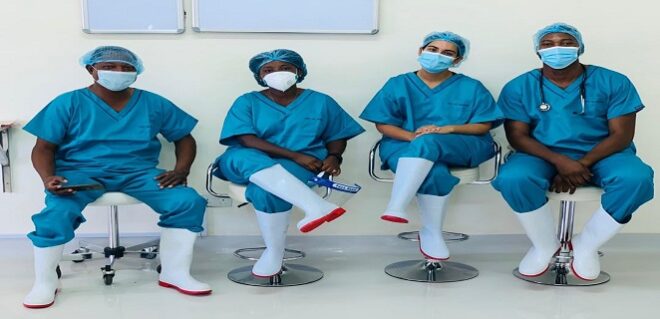
Mabvuku Polyclinic Starts Offering Cesarean Services

Mabvuku Polyclinic has started offering cesarean services in line with the City Health department’s vision of expanding comprehensive healthcare services at community level. Staff Reporter A team of doctors and nurses who will be working in the Mabvuku Poly Clinic have already been deployed as Council intends to roll out the service to three more centres.  …Detailed article to follow

Read More

Unsafe abortions lead to immediate and long term complications

COMPLICATIONS arising from post unsafe abortion infections could have long term implications on the fertility of women due to the unsterile nature of the environments and objects used during unsafe abortions procedures, a local Obstetrician and Gynecologist has warned.  . By Michael Gwarisa    Speaking to HealthTimes, Dr Grant Murewanhema an Obstetrician and Gynecologist said unsafe abortions were happening and unfortunately they were they were among the leading cause of maternal mortality in Zimbabwe. When you look at it just in the immediate short term after this act has been…

Read More

Teen Pregnancies and Early Marriages Rear Ugly Head in Zim’s Farming Communities

IT’S a normal day inside Sable Ranch, a farming community at least 6 kilometers outside Marondera town in Mashonaland East province. Since its tobacco planting season, majority of labourers have been sent on a two-week long leave to give the tobacco plant enough time to grow. Just like their parents, school children at Ranch Farm and other surrounding farming communities are attending school just twice every week to adhere to government set COVID-19 prevention protocols. By Michael Gwarisa recently in Marondera, Mashonaland East While the adults have capitalized on the…

Read More

Two Years After Nairobi Summit, High-Level Commission calls for urgent, ambitious action to end alarming disparities in sexual and reproductive justice

Two years on from the Nairobi Summit on ICPD25 — where governments, civil society and the private sector came together voluntarily to recommit to realizing the promises of the landmark 1994 International Conference on Population and Development (ICPD) in Cairo — the High-Level Commission on the Nairobi Summit on ICPD25 Follow-up has launched its first report. Own Correspondent The Commission, an independent advisory body of eminent leaders from around the world was formed to track progress on the 12 commitments in the Nairobi Statement.  In its report, “No Exceptions. No…

Read More

#BREAKING: Midwives Crises Hits Mbuya Nehanda Maternity Unit

MBUYA Nehanda Maternity division, one of Zimbabwe’s largest maternity units located at Parirenyatwa Hospital in Harare, is battling serious shortages of skilled midwives amidst indications that the facility recently experienced an incident whereby only one midwife ended up attending to at least 26 pregnant women. By Michael Gwarisa A visit by this publication to the facility in on Friday, 29 October, 2021 revealed that only one midwife was on duty for several hours while at least 26 women waited to be attended. Some of the women who were visibly in…

Read More

COVID-19 Vaccine Hesitancy Among Zim Pregnant Women Cause For Concern- Findings

Young Preganant Women

NEW journals by renowned Zimbabwe’s Public Health Expert Dr Grant Murewenhema et al has revealed huge gaps in vaccination among women of reproductive age from resource constrained settings such as Zimbabwe. By Michael Gwarisa The two papers one on Vaccination hesitancy among women of reproductive age in resource-challenged settings: a cause for public health concern and COVID-19 Vaccination for pregnant women in Zimbabwe: a public health challenge that needs an urgent discourse both try to look at how pregnant and women and those of reproductive age are responding to the…

Read More

Calls To Fast track Adoption Of The Marriage Bill Get Louder

THE Parliamentary Portfolio Committee on women affairs together with women and girls rights advocates and organizations have called for the speedy adoption of the marriages bill which classifies child marriage as a serious criminal offense so as to end child marriages. By Michael Gwarisa Speaking during a virtual National Symposium on Child Marriages that was organized by Musasa Project, Parliamentary Portfolio Committee on Women Affairs, Gender and Community Development Chairperson, Honorable Chido Madiwa said the high prevalence of child marriages in Zimbabwe was inconsistent with the country’s goals and development…

Read More

Ending Harmful Practices Starts With Allowing Girls & Women Bodily Autonomy- UNFPA

Young Preganant Women

THE United Nations Population Fund (UNFPA) Zimbabwe’s Assistant Country Representative, Ms Abbigail Msemburi says woman and girls should have power to make decisions over their bodies as a first step towards ending child marriages, traditional harmful practices and all forms of abuse. By Michael Gwarisa Presenting findings from the 2021 State of the World Population (SWOP) Report during a virtual commemoration of the World Population Day, Ms Msemburi said majority of women were still denied bodily autonomy and data from the SWOP indicated that half of women in 57 developing…

Read More

Obstetric Fistula: New Amnesty International Report Reveals How Barriers To Accessing Public Health Facilities Expose Zim Women And Girls To Life-changing Childbirth Related Injuries

PREGNANT  women and girls in Zimbabwe are at risk of  life changing childbirth-related injuries, including obstetric fistula, as many shun public healthcare facilities in favour of home-based deliveries due to inadequate health infrastructure, cultural practices  and high hospital costs, Amnesty International said today in a new report. HealthTimes Reporter The report, “I never thought I could get healed from this“, lays bare the physical and psychological trauma that women and girls who experience obstetric fistula in Zimbabwe go through. The condition, described as the “most devastating birth injury” by the…

Read More