Demystifying safe abortion: Getting the FACTS right!

By Memory Pamella Kadau The issue of abortion is often sensitive and divisive. It separates opinions, and this is mostly due to ignorance of the facts surrounding this subject. This article looks at some of the popular MYTHS surrounding abortion and sets out the FACTS as part of enriching debate on the topic. In doing so, the article will pose a question and then highlight a popular myth which and will then counter with factual information from science and practice. What is abortion? Myth: There is tendency by anti-abortionists that…

Read More

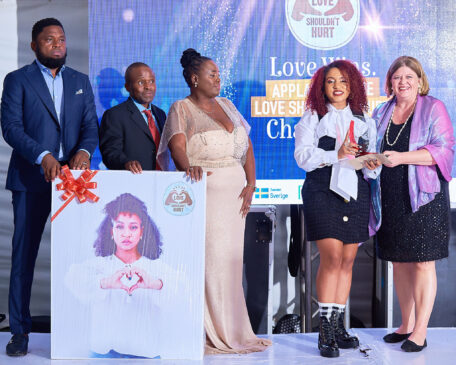
Sweden Honors Love Shouldn’t Hurt Ambassadors

THE Embassy of Sweden in Harare and its partner, Population Solutions for Health (PSH), awarded several celebrities and influencers for using their voice to amplify the Love Shouldn’t Hurt (LSH) campaign, a movement  against intimate partner violence. By Michael Gwarisa The Awards Ceremony was held at the Swedish Ambassador’s residence in Harare on Friday 24, March 2023 and they were meant to applaud and recognize the champions who made the Love Shouldn’t Hurt campaign a resounding success. In her speech at the awards event, Embassy of Sweden to Zimbabwe Ambassador…

Read More

SET A THIEF TO CATCH A THIEF: How AWET Health interventions have reduced home deliveries Among Apostolic Women and Girls in Shurugwi

Caroline Ngosha (23), from Shurugwi is expecting her third child in a few months’ time. In both her previous pregnancies, she delivered her children at home in line with the dictates of her religion, a white garment apostolic sect. Some apostolic sects in Zimbabwe do not allow their followers to use family planning or contraception methods. Neither do they sanction female followers to register with the Anti Natal Clinic (ANC), later on deliver in a health institution. By Michael Gwarisa in Shurugwi She remembers vividly how life threatening giving birth…

Read More

Unpacking Zimbabwe’s post abortion care responsibility and gaps

By Memory Pamela Kadau Across the world, abortion related complications constitute part of the major reasons women seek emergency obstetric care. According to the Post Abortion Care Consortium, Post abortion care (PAC) consists of emergency treatment for complications related to spontaneous or induced abortions. It also includes family planning and birth spacing counseling, and provision of family planning methods for the prevention of further mistimed or unplanned pregnancies that may result in repeat induced abortions. Comprehensive PAC also includes services such as medical assessment for sexually transmitted infections, including HIV/AIDS.…

Read More

Zimbabwe Spends US$17 Million On Family Planning

LATEST data from the Family Planning (FP2030) report indicates that in 2021, Zimbabwe spent a significant amount of money to support family planning, including commodity purchases, demand creation campaigns, investments in training and research, and service delivery. By Michael Gwarisa Data from the FP2030’s 2022 Measurement Report includes estimates for 59 countries and from amongst these, Zimbabwe is estimated to have spent US$$17,928,498 in 2021 making it one of the countries in East and Southern Africa (ESA) with the highest Family Planning domestic expenditures. From the data presented in the…

Read More

Use Of Modern Contraceptives Prevents 141 million unintended pregnancies, 29 Million Unsafe Abortions In 2022

DATA from the Family Planning 2030’s 2022 Measurement Report has shown an increase in the use of modern contraception around the world, with an estimated 371 million women of reproductive age in low- and lower-middle-income countries now using a modern method of family planning, 87 million more than just a decade ago. By Michael Gwarisa FP2030’s 2022 Measurement Report, which was previewed in November 2022 at the International Conference on Family Planning, shows that more women in low- and lower-middle income countries are using modern family planning methods than ever…

Read More

Abortion is not illegal but restricted in Zimbabwe

By Memory Pamella Kadau Zimbabwe’s Termination of Pregnancy Act (TOP) provides a legal framework on when and how can women and girls access safe abortion services. The Act provides only three grounds under which pregnancy can be lawfully terminated in the country.  It further provides that pregnancies can only be terminated by a registered medical practitioner and authorized by a court order. However, these grounds are very narrow and result in a many women and girls seeking unsafe abortions every year which expose them to health complications and death. The…

Read More

Zim Moves To Set Up Low-cost IVF Centre To Assist Infertile Couples

In a move that is set to address catastrophic costs associated with accessing In vitro fertilisation (IFV) services, a team of Zimbabwean medical doctors is working with the government and the University of Zimbabwe (UZ) to establish a low cost IVF centre to run under the public sector healthcare system. By Michael Gwarisa in Dubai IVF is a process of fertilisation where an egg is combined with sperm in vitro. The process involves monitoring and stimulating a woman’s ovulatory process, removing an ovum or ova from her ovaries and letting…

Read More

Access to abortion is critical for women socio-economic growth

By Memory Pamela Kadau The economy is often described as consisting of firms, government and households. Economic activities of households are determined by income, savings and what they can spend on such basics as health, food, education and clothing, socials amongst other recurrent needs of households. Of critical importance for the economic balance of the household is the number of dependents in each household. Children constitute the majority of dependents in households and meeting their needs takes up a significant amount of the household budget. In Zimbabwe, the government doesn’t…

Read More

Merck Foundation Africa Asia Luminary 2022 Kicks Off In Dubai

THE 9th edition of the Merck Foundation Africa Asia Luminary, a yearly educational conference conducted to contribute to Africa and Asia’s socio-economic development, has commenced in Dubai amidst growing calls for governments in Africa to make infertility treatment affordable to the general citizenry. By Michael Gwarisa The two day conference, a hybrid meeting is being attended by over 6000 delegates physically and online and these include healthcare providers, Policy makers, academia, researchers and health media from more than 70 English, French and Portuguese speaking countries. Giving her introductory remarks, Merck…

Read More