By Dingaan Mithi For many months, there has been speculation on the possible origins of Covid-19. While there is no conclusive proof or evidence as to where exactly the virus originated from, the US Federal Bureau of Investigation (FBI) blamed the Chinese government, pointing to a laboratory leakage of the virus, a new report by public health experts finds that Covid-19 could have originated in raccoon dogs. On 4 March 2023, scientists discovered accessions posted publicly on the Global Initiative on Sharing Avian Influenza Data (GISAID), a global science initiative…
Read MoreTag: WHO
#BREAKING: Marburg virus disease could become global outbreak
THE World Health Organisation (WHO) has not ruled out the possibility of the Marburg virus disease (MVD) becoming a global health pandemic if necessary precautions are not taken on time. By Michael Gwarisa According to the Africa Center for Disease Control, MVD is a highly fatal, zoonotic haemorrhagic disease caused by the Marburg virus. Human-to-human transmission occurs through direct contact with body fluids from infected persons, or contact with equipment and other materials contaminated with infectious blood or tissues, body fluids of infected people, and contaminated surfaces or materials. Giving…
Read MoreIncapacitated DR-TB Patients Bear The Brunt of Catastrophic Costs
Nqobizitha Nkomo and his wife from Insiza District in Matebeleland South, were both diagnosed of Drug Resistant Tuberculosis (DR-TB) about a year ago. Even though they say they are feeling better, Nkomo recounts how their situation almost reduced them to beggars of some sort in their quest to sustain their treatment and recovery journey. By Michael Gwarisa Drug-resistant TB (DR-TB) is a form of tuberculosis which has developed resistance to the main medicines used to treat TB. This form of TB can be resistant to one or more anti-TB medicines.…
Read MoreMulti-stakeholder approach key in NTD elimination
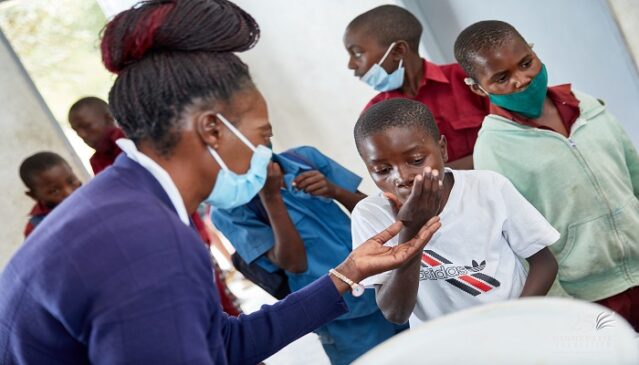
By Dr Kennedy Mubaiwa, Higherlife Foundation CEO Tadiwa, an 11-year-old Grade six student in rural Zimbabwe has missed school for more than a week. She has a distended stomach, nausea, pain, and dizziness. Tadiwa is well known for playing in a nearby stream, the only water source for her village. Today Tadiwa visited the clinic, where she was diagnosed with intestinal worms otherwise known as soil-transmitted helminths (STH) and treatment was started immediately. Intestinal worms are one of the Neglected Tropical Diseases (NTDs) affecting more than 1 billion children worldwide.…
Read MoreCountries No Longer Sharing COVID-19 Sequencing Data- Dr Tedros
THE number of COVID-19 sequences being shared by countries has dropped by more than 90% while the number of countries sharing sequences has fallen by a third since the onset of the Omicron variant in 2021, the World Health Organisation (WHO) has said. By Michael Gwarisa Speaking during a media briefing, WHO Director General, Dr Tedros Adhanom Ghebreyesus said it was now difficult to give data relating to COVID-19 due to lack of sequencing data. It’s now three years since the first sequence of SARS-CoV-2 was shared with the world.…
Read MoreWest End Clinic acquires new ophthalmic equipment
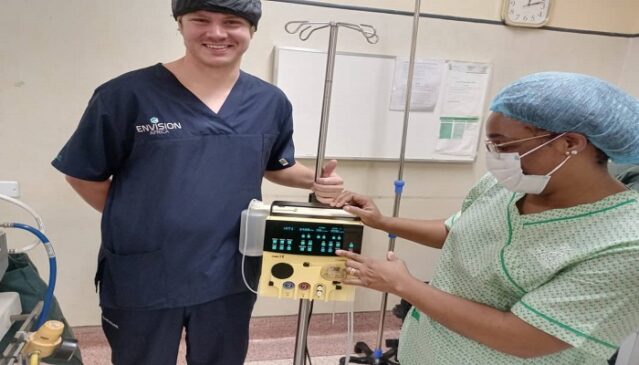
West End Clinic has acquired an advanced diagnostic and surgical machine which will enhance the safety and efficiency of cataract removal procedures by surgeons at the institution. By Staff Reporter The clinic’s manager Pharoah Makarudze said the new CataRhex 3 Phaco machine will help surgeons carry out treatment procedures for cataract removals in a more efficient way that reduces costs and healing time for patients. We bought a new Phaco machine at a cost of more than US$32 000 as we step up efforts to upgrade our hospital equipment and…
Read MorePut health at the front and centre of COP27, says WHO
The World Health Organisation (WHO) says health must be put at the fore at the COP27 climate change negotiations. By HealthTimes Reporter The COP27 negotiations began today in Egypt. “On the eve of the pivotal climate talks at COP27, WHO issues a grim reminder that the climate crisis continues to make people sick and jeopardizes lives and that health must be at the core of these critical negotiations. “WHO believes the conference must conclude with progress on the four key goals of mitigation, adaptation, financing and collaboration to tackle the…
Read MoreRegional Sexual and Reproductive Health Rights Symposium Kicks-off In Victoria Falls, Zimbabwe
OVER 20 African countries are gathered in the resort town of Victoria Falls to deliberate on issues around access to Sexual Reproductive Health and Rights (SRHR) for young people with the aim of finding a lasting solution to teenage pregnancies, gender-based violence, and HIV infections in East and Southern Africa. By Michael Gwarisa in Victoria Falls The three day regional symposium which will run up to Thursday, October 13, 2022 has been organized by the UNAIDS, UNFPA, UNICEF and WHO under the banner of the Joint UN Regional 2gether 4…
Read MoreWHO Urges Previously Vaccinated Children below 5 Years To Get Measles Vaccines
THE World Health Organisation (WHO) Country Representative, Dr Alex Gasasira has advised parents to take their children for vaccination regardless of their previous vaccination status. By Catherine Murombedzi The call comes in the midst of a raging Measles outbreak that since claimed 698 lives and infected a cumulative total of 6 291 Cases, while 4 459 have recovered. Speaking in a telephone interview, Dr Gasasira said children between 6 months to under 5 years should be vaccinated irrespective of prior vaccination status. “We urge parents and guardians to bring all…
Read MoreHalf of health care facilities globally lack basic hygiene services – WHO, UNICEF
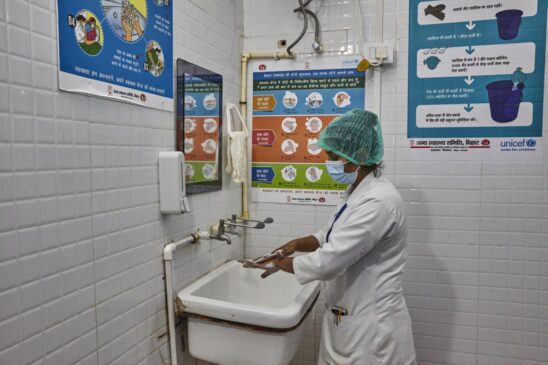
Newly established global estimate on hygiene reveals the risk of disease spread and infections to patients and health care providers Half of health care facilities worldwide lack basic hygiene services with water and soap or alcohol-based hand rub where patients receive care and at toilets in these facilities, according to the latest Joint Monitoring Programme (JMP) report by WHO and UNICEF. Around 3.85 billion people use these facilities, putting them at greater risk of infection, including 688 million people who receive care at facilities with no hygiene services at all.…
Read More