When the River Found Its Way Into Simwenge, Binga
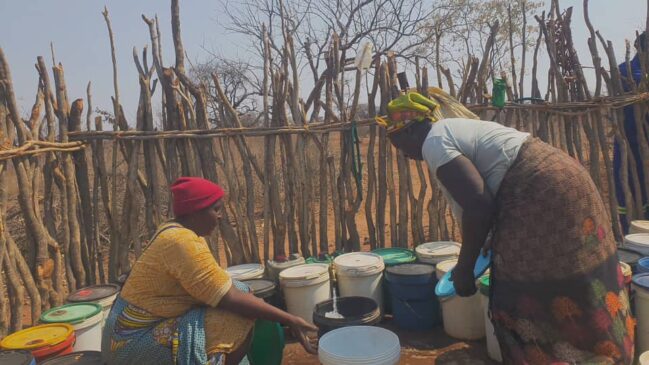
Women collecting water from the Simwenge water point in Binga, Zimbabwe, using buckets and jerrycans

By Michael Gwarisa Some years ago, a borehole drilling company struck water in Simwenge Village under Chief Siansundu in Binga, sparking celebrations across the community. But the joy was short-lived. The water was hot and salty, likely the result of hitting a natural hot spring. Even after the Zimbabwe Red Cross Society (ZRCS) intervened in 2023 to rehabilitate the borehole, the problem persisted, leaving the community in ongoing water distress. The old borehole served 93 households but frequently broke down due to the high temperature of the water. “The water…

Read More

Study Finds Significant Rates of Infidelity Among Doctors and Nurses

By Staff Reporter  A new study published in the International Journal of Environmental Research and Public Health has revealed that infidelity is not uncommon among medical professionals, with 21 percent of participating doctors and nurses admitting to having engaged in an unfaithful relationship. The study, titled “Incidence and Related Factors of Infidelity among Medical Doctors and Nurses,” was conducted by researchers Sara Guerrero, Gracia Castro-Luna, Rosa Zapata Boluda, Aida Freites, Rafael García, and Tesifón Parrón-Carreño. It sought to understand the prevalence of infidelity within the medical profession and the factors…

Read More

Red Cross Restores Dignity to Persons with Disabilities in Binga Through Accessible Toilets

Construction workers completing an accessible toilet for Gogo Mleya, a person with disabilities, in Saba village, Binga.

By Michael Gwarisa in Binga For more than a decade, Mrs. Esteri Simwaka from Siansundu Village in Binga has been helping her 13-year-old daughter, Bwime, relieve herself in the backyard or nearby fields. “It was easier when she was younger,” said a teary Mrs. Simwaka. “But now she’s grown and much heavier. I can’t lift her anymore. I place her in a bathing dish, drag her across uneven ground to the bush, lift her up so she can relieve herself, clean her, and then drag her back home. The sun…

Read More

Nicotine Isn’t the Enemy: World Expert Corrects a Century of Misconception

Nicotine Isn’t the Enemy: World Expert Corrects a Century of Misconception

By Michael Gwarisa For decades, misinformation and misconceptions about nicotine’s role in cancer and tobacco-related diseases have dominated public health discussions. These misconceptions are not limited to the general public; even among medical professionals, confusion persists. A Rutgers-led study found that about 80 percent of physicians surveyed believed nicotine directly causes cancer. Speaking during a session on Lessons in Tobacco Harm Reduction, where he shared insights from an oncologist’s perspective, Professor David Khayat said nicotine misinformation remains widespread among doctors and physicians. We see that there are many physicians who…

Read More

AI Powered Chatbot Shows Promise in Smoking Cessation

WASHINGTON (Oct. 13, 2025) — A pilot study led by researchers at the George Washington University found that people who smoke were open to using a specialized ChatGPT-based chatbot, called BeFreeBot, to help them quit smoking. The research team sought to assess the feasibility and acceptability of the tool among smokers, as well as the tool’s reliability. A majority of participants who engaged the chatbot were highly satisfied with the tool, according to the study. The findings, published in JMIR Formative Research, suggest that AI chatbots could strengthen existing smoking cessation programs…

Read More

Domestic Health Financing To Be Top Of The Agenda For CPHIA 2025

By Michael Gwarisa The tone has already been set for the hosting of the Fourth International Conference on Public Health in Africa (CPHIA 2025) scheduled for Durban, South Africa from October 22 to 25, 2025. The conference will deliberate on numerous issues, chief among them domestic health financing, as Africa seeks sustainable solutions amid dwindling donor support. The meeting will be held under the theme “Moving Towards Self-Reliance to Achieve Universal Health Coverage and Health Security in Africa” and will be co-hosted by the Africa CDC and the Government of…

Read More

Zimbabwe and UNFPA Begin Consultations for 9th Country Programme (2027–2031)

By Michael Gwarisa The Government of Zimbabwe and the United Nations Population Fund (UNFPA) have commenced consultations to develop the 9th Country Programme of Cooperation, which will run from 2027 to 2031. The two-day Stakeholder Engagement Workshop, taking place in Harare from 6 to 7 October 2025, brings together senior government officials, civil society, academia, youth representatives, and development partners to collectively shape the country’s future priorities for sexual and reproductive health and rights (SRHR), gender equality, and population dynamics. According to the concept note, the workshop seeks to “collectively…

Read More

Zimbabwe Faces Severe Shortage of Forensic Pathologists

Minister of Health Dr. Douglas Mombeshora shares a light moment with Dr. Ron Mhizha of the Eye Institute and Chrispen Dzingirai of Old Mutual Zimbabwe during the launch of free cataract eye clinics.

By Michael Gwarisa Zimbabwe is grappling with a critical shortage of forensic pathologists, a crisis that has forced families to transport bodies across provinces for post-mortem examinations and delayed justice in criminal cases. Health and Child Care Minister Dr. Douglas Mombeshora told Parliament this week that until recently, the country had only one qualified forensic pathologist, making it nearly impossible to conduct timely examinations across the nation. Forensic post-mortems require specialised expertise beyond the training of general pathologists. Unfortunately, we only had one forensic pathologist in the country. This created…

Read More

Stunting Remains a Critical Challenge for Zimbabwe’s Children, Report Reveals

By Michael Gwarisa  Despite improvements in several food security and nutrition indicators, stunting rates among children under five in Zimbabwe remain alarmingly high, posing a significant threat to the nation’s human capital and long-term development, according to the recently released 2025 Rural Livelihoods Assessment Report. The report, produced by the Zimbabwe Livelihoods Assessment Committee (ZimLAC), indicates that 23.8% of children aged 6-59 months are stunted. Stunting, defined as impaired growth and development due to poor nutrition, repeated infection, and inadequate psychosocial stimulation, has lifelong consequences for health, cognitive ability, and economic productivity.…

Read More

National AIDS Council Communications Director, Madeline Dube Dies

By Michael Gwarisa The National AIDS Council (NAC) is mourning the passing of its long-serving Communications Director, Ms. Madeline Dube, an accomplished radio journalist and seasoned communicator whose work left a lasting impact on Zimbabwe’s HIV and AIDS response. The tragic news was confirmed by NAC Chief Executive Officer, Dr. Bernard Madzima, who described Ms. Dube’s death as a profound loss not only to the health sector but to the nation as a whole. The passing on of our Communications Director, Ms. Dube, is a tragic loss not only to…

Read More